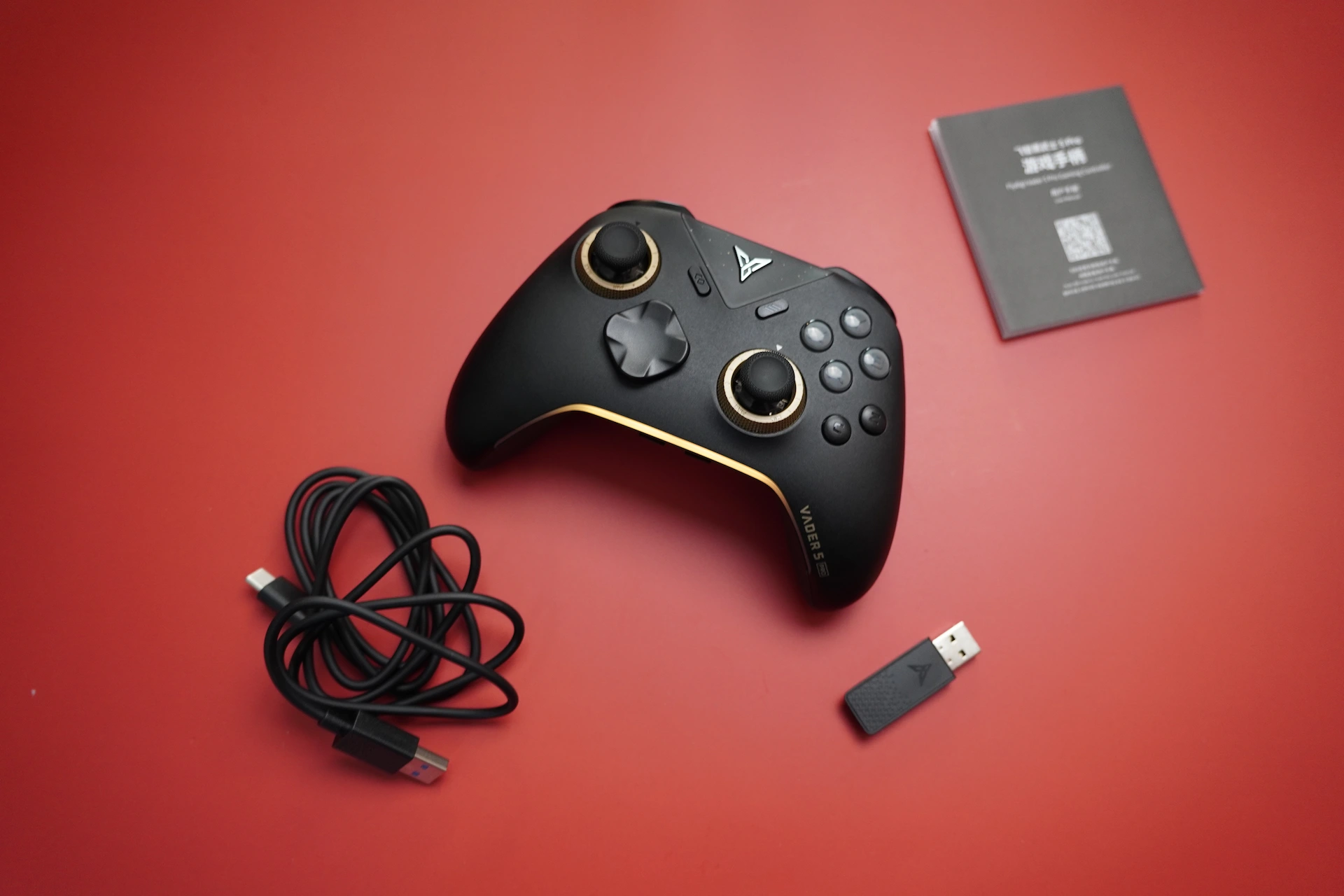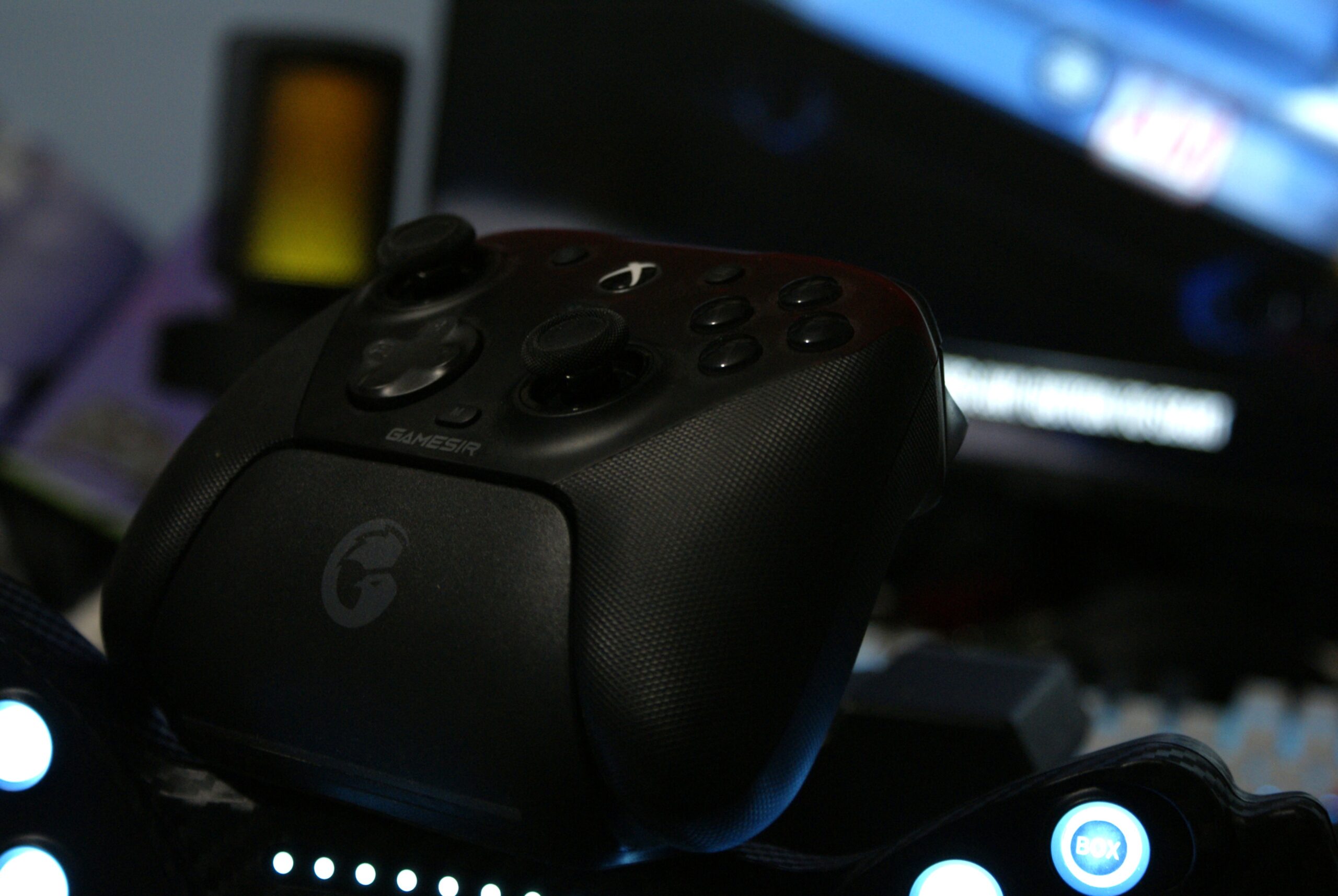
The time has come for manufacturers to start releasing their top-of-the-line models. In a short series, we’ll be taking a look at several models, from the ZD to the Flydigi. However, the first one I’ve tested is the latest offering from the Chicken manufacturer, the already somewhat meme-infested GameSir G7 Pro. Did the production delays benefit it? Have they managed to create the best controller for the console? Time to find out!
Packaging
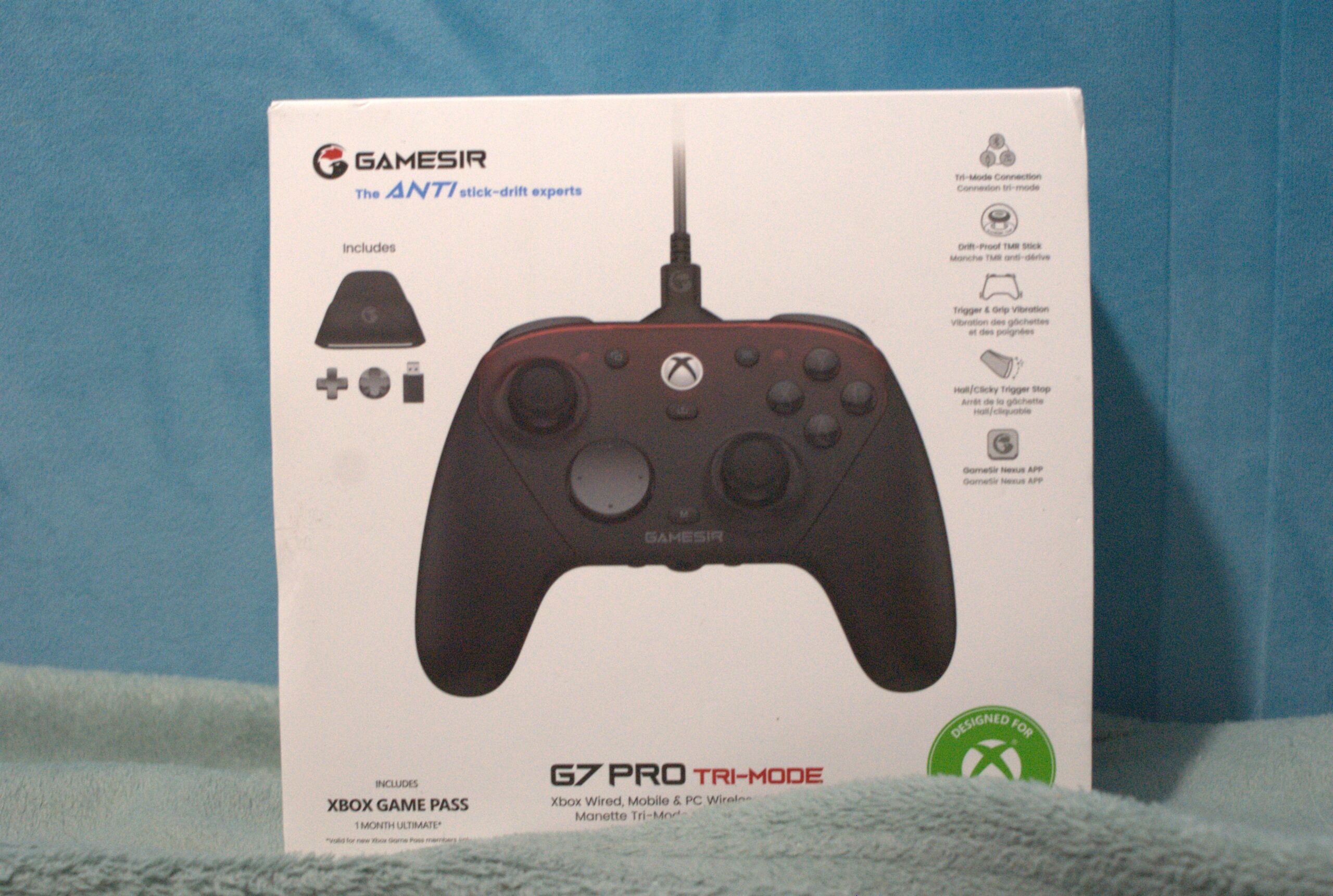
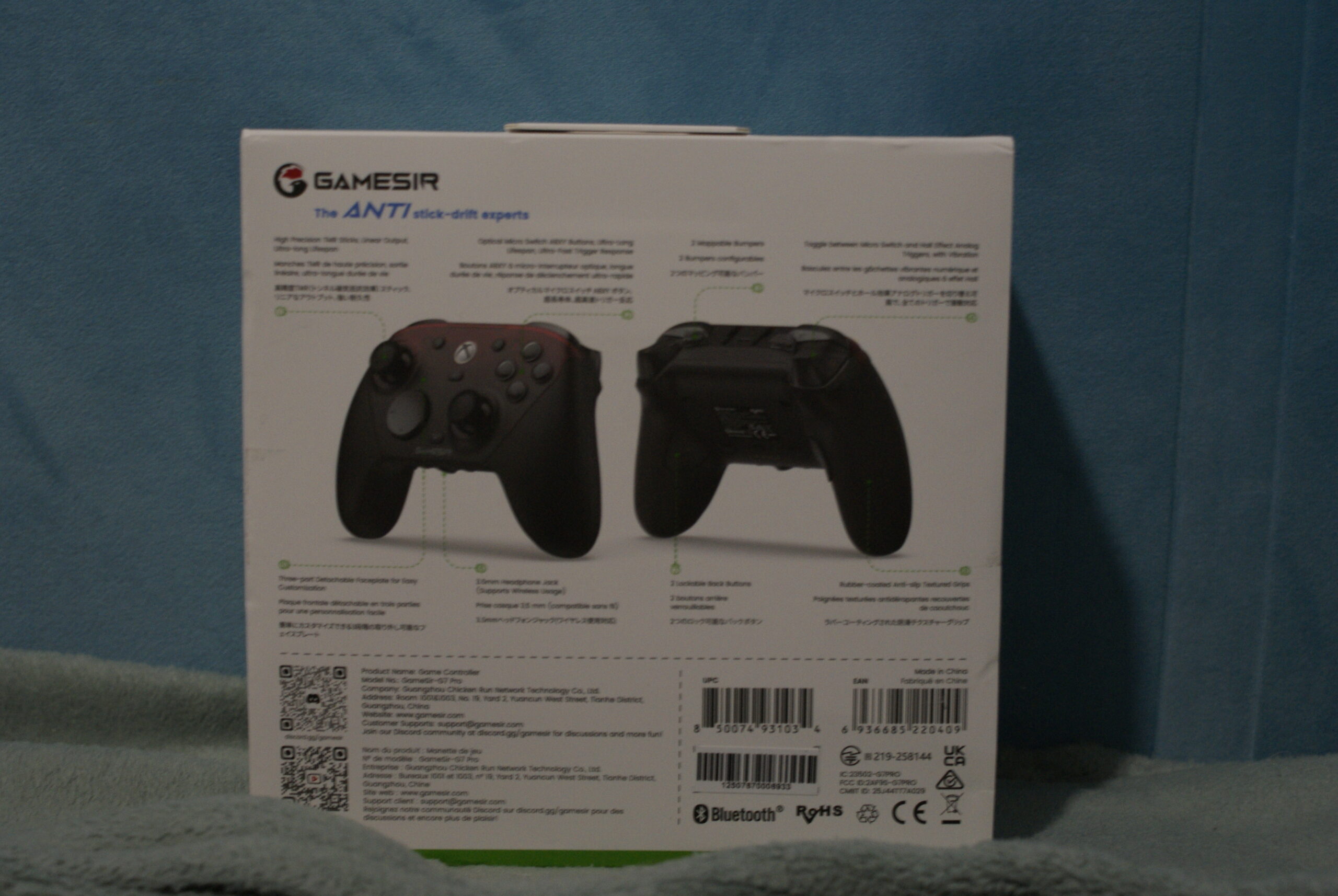
Standard versions of the G7 Pro come packaged in a standard white cardboard box with a dust jacket. On the front, we have the controller and accessories, and on the back, a more detailed description of the controller. After removing the dust jacket and opening the box, we see the controller, dock, and additional D-Pads. Under the cardboard insert, we find the paperwork and a USB-C cable.
Specifications
- Layout: Xbox
- Compatibility: PC, Xbox One, Xbox Series, Mobile
- Connectivity: Wired, 2.4 GHz, Bluetooth
- Analogs: GameSir x K-Silver JS16 (TMR)
- Triggers: Hall Effect with trigger lock
- Main Switches: Optical for ABXY, Mechanical for D-Pad
- Secondary Switches: 2 on the back + 2 on the top
- Gyroscope: Yes
- Vibration Motors: Two asymmetrical + two in the triggers
- Battery: 1200 mAh
- Available Colors: Mecha White, Shadow Ember, Wuchang, Zenless Zone Zero (these versions are wirelessly compatible with the Xbox consoles)
- Docking Station: Included
- Price: approximately 100 (closer to 125$ for the Wuchang version, 150$ for the ZZZ version)
Specifications are based on the manufacturer’s website and our own observations.
Initial Impressions and observations
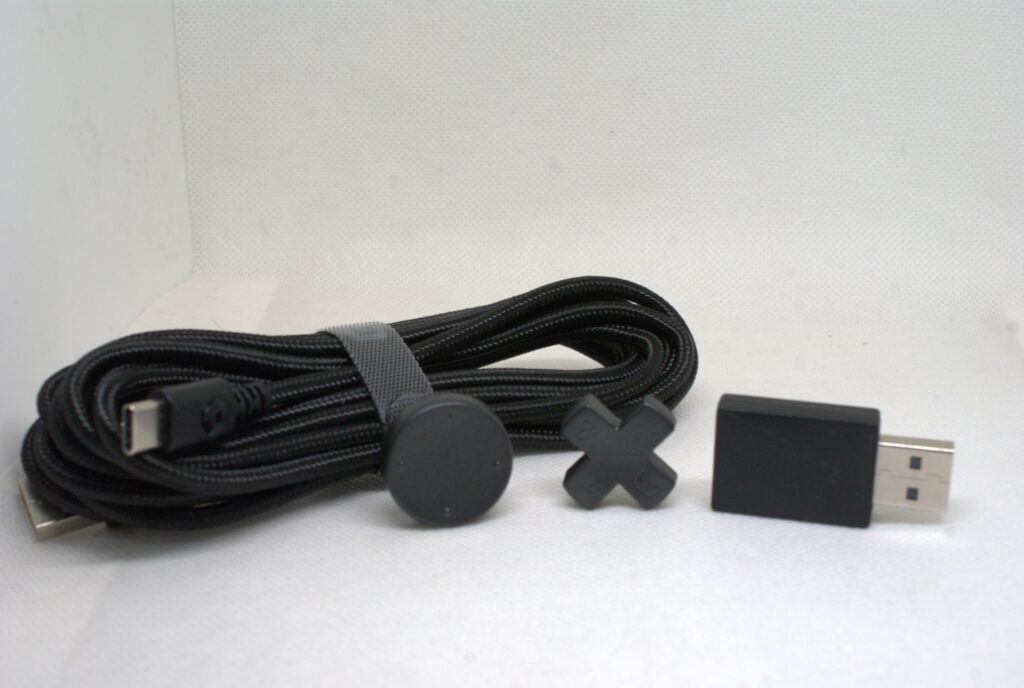
Starting with the USB cable, which is ultimately more interesting than the most basic cable, this one has a fairly good-quality braid that’s easy to straighten. Of course, the cable’s color matches the controller’s color scheme. As for the 2.4 GHz receiver, besides being a comically simple design in the shape of a (slightly inflated) right prism, even without a pairing button, it has one interesting aspect.
As you might have noticed, the G7 Pro comes in three color versions: Mecha White and Shadow Ember, which are the basic versions, and the Wuchang versions: Fallen Feathers and Zenless Zone Zero, which are special editions compatible wirelessly with Xbox with a slightly higher MSRP. And as you might have guessed, since the G7 Pro includes a receiver, it’s a wireless controller. However, (unfortunately) the basic version didn’t receive wireless compatibility due to its low price (thanks, Microsoft). However, the release of special editions (hopefully not the only ones) allowed the G7 Pro versions to achieve such compatibility.
But are there any differences between these controllers, besides design? Absolutely not, except for the dongle firmware. And, funnily enough, the basic version can be paired without any major issues with the Xbox Wireless controller dongle and vice versa. Consequently, the basic version can be converted to a wireless version compatible with the console. It’s just a shame that this comes at the expense of buying a second, more expensive unit, because unfortunately, no one has released the firmware for the special editions yet.
The G7 Pro dock is practically a copy of a friend’s homework, a clone of the 8BitDo dock. I don’t think that’s a bad thing, because the design is painfully simple and at the same time quite aesthetically pleasing. Furthermore, the dock connects seamlessly to the controller itself, meaning we don’t have to worry about whether it’s charged or not. There’s no point in artificially extending this review and discussing the dock again, so I recommend checking out my 8BitDo reviews if you want to know more about the dock included with the G7 Pro.
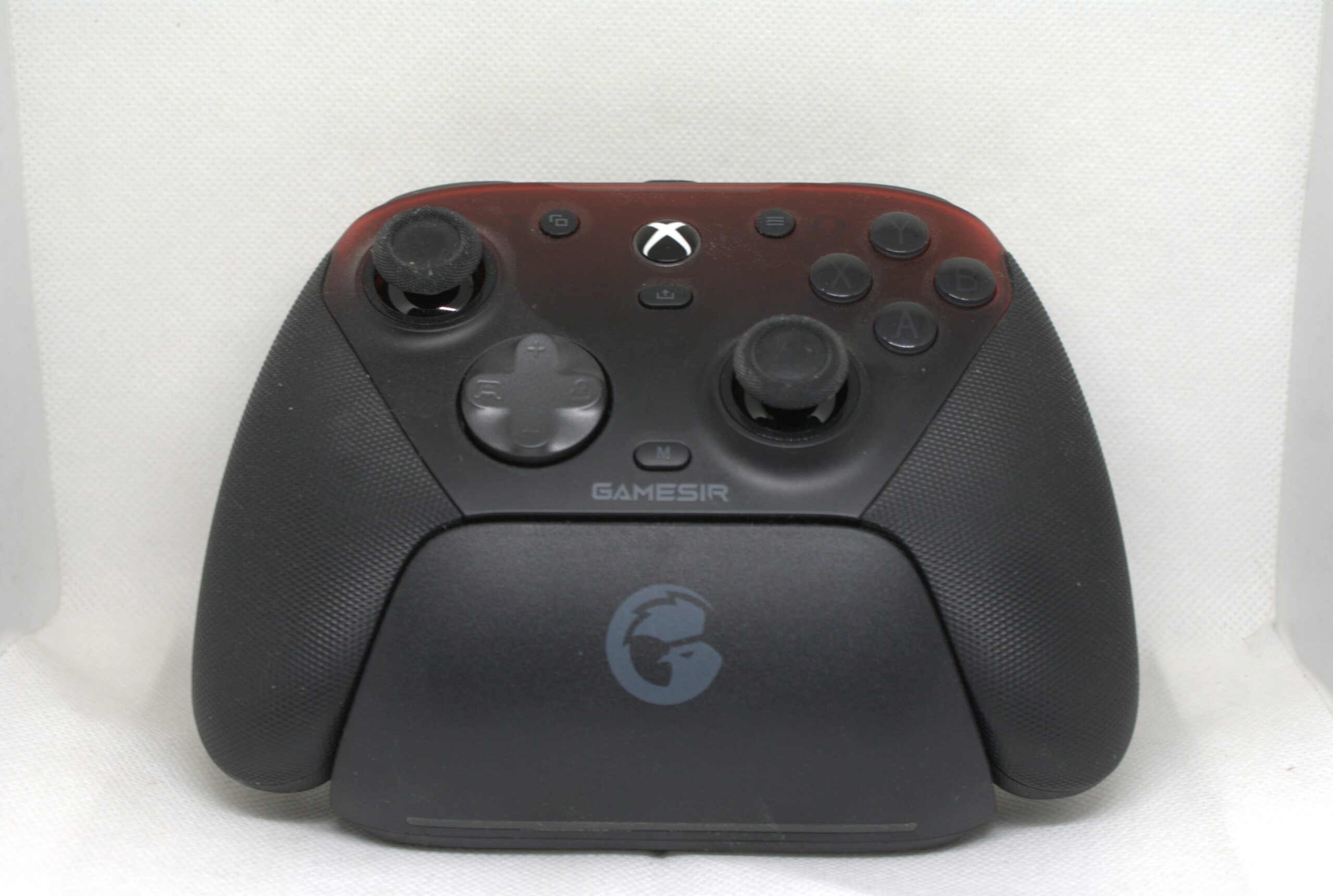
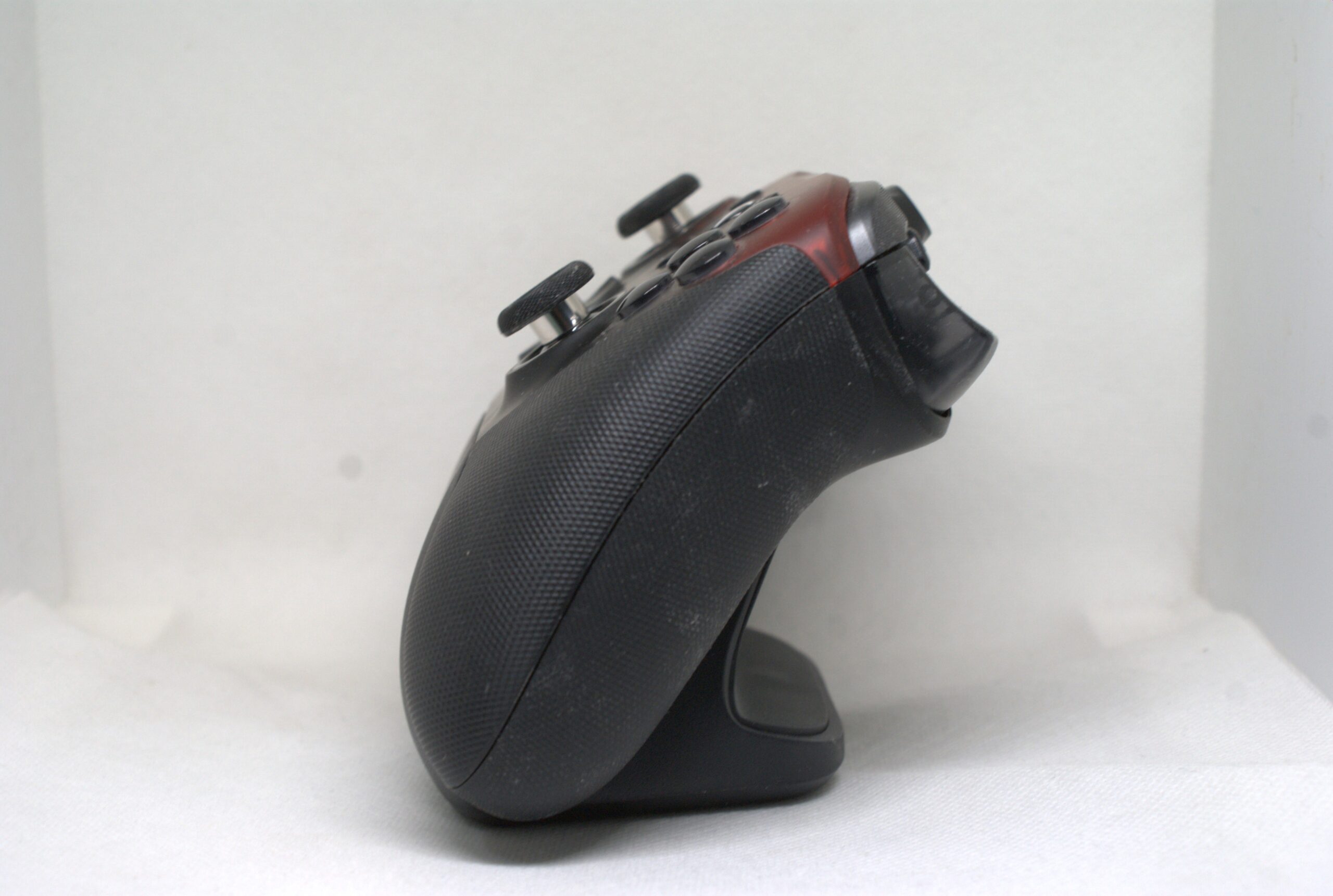
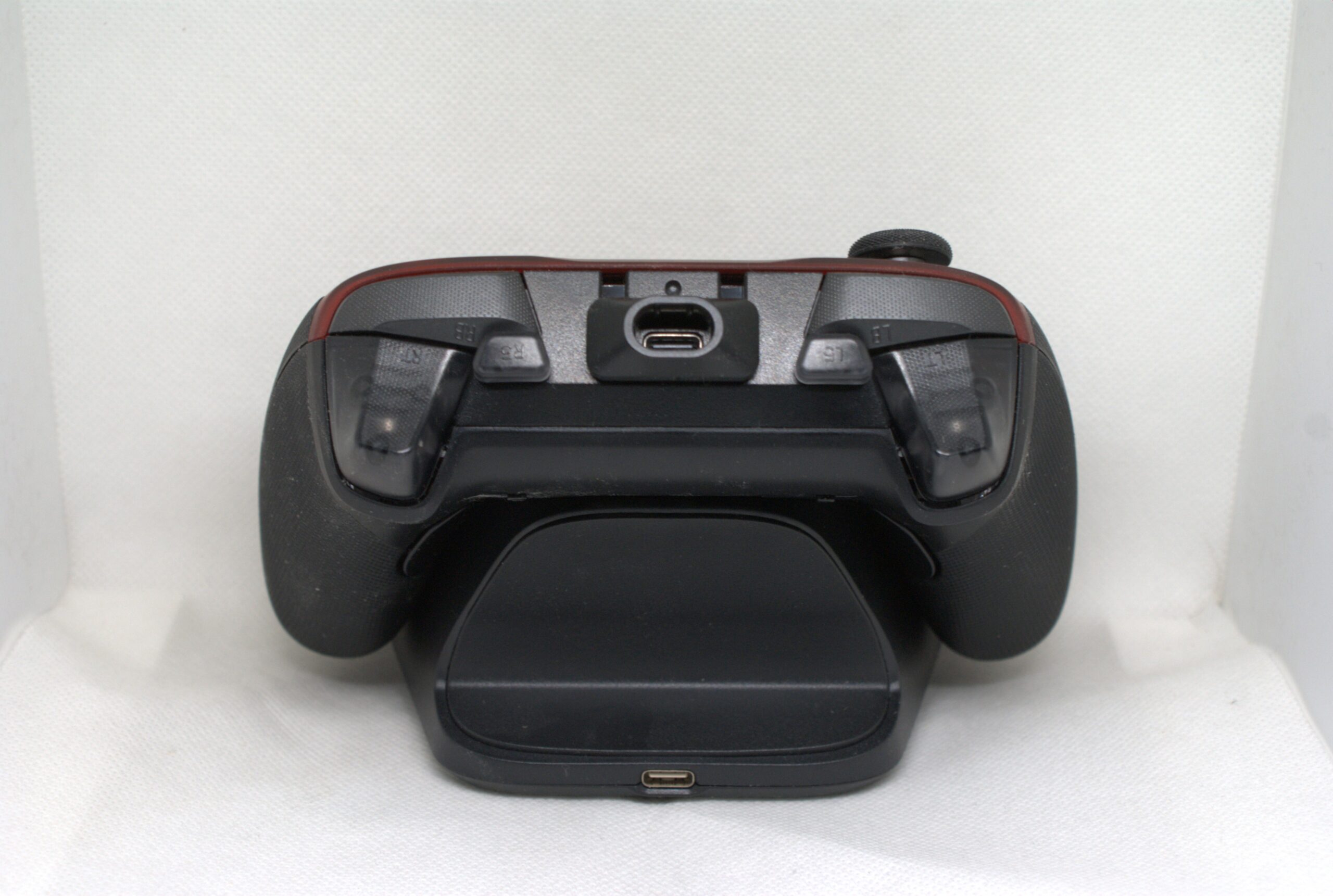
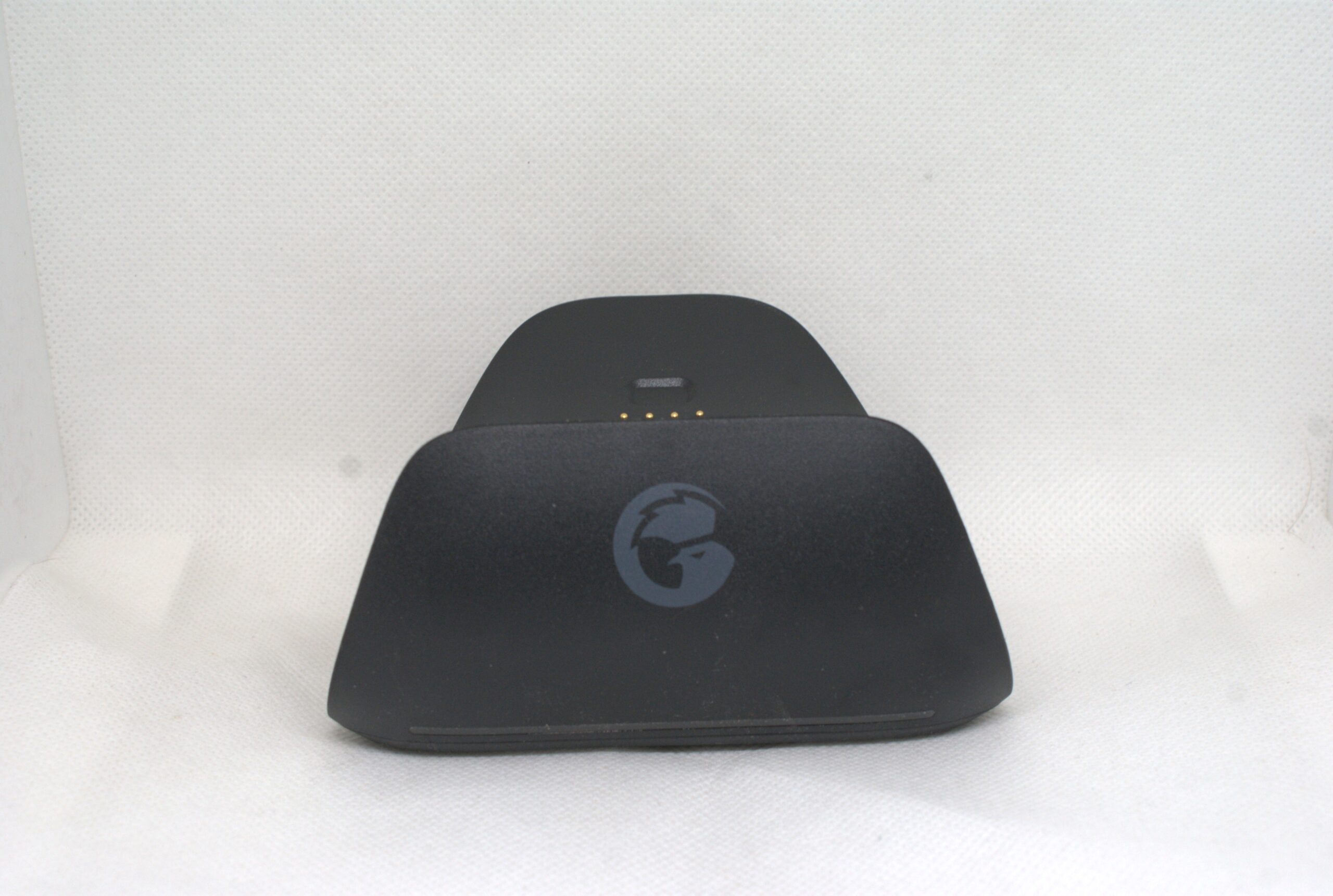
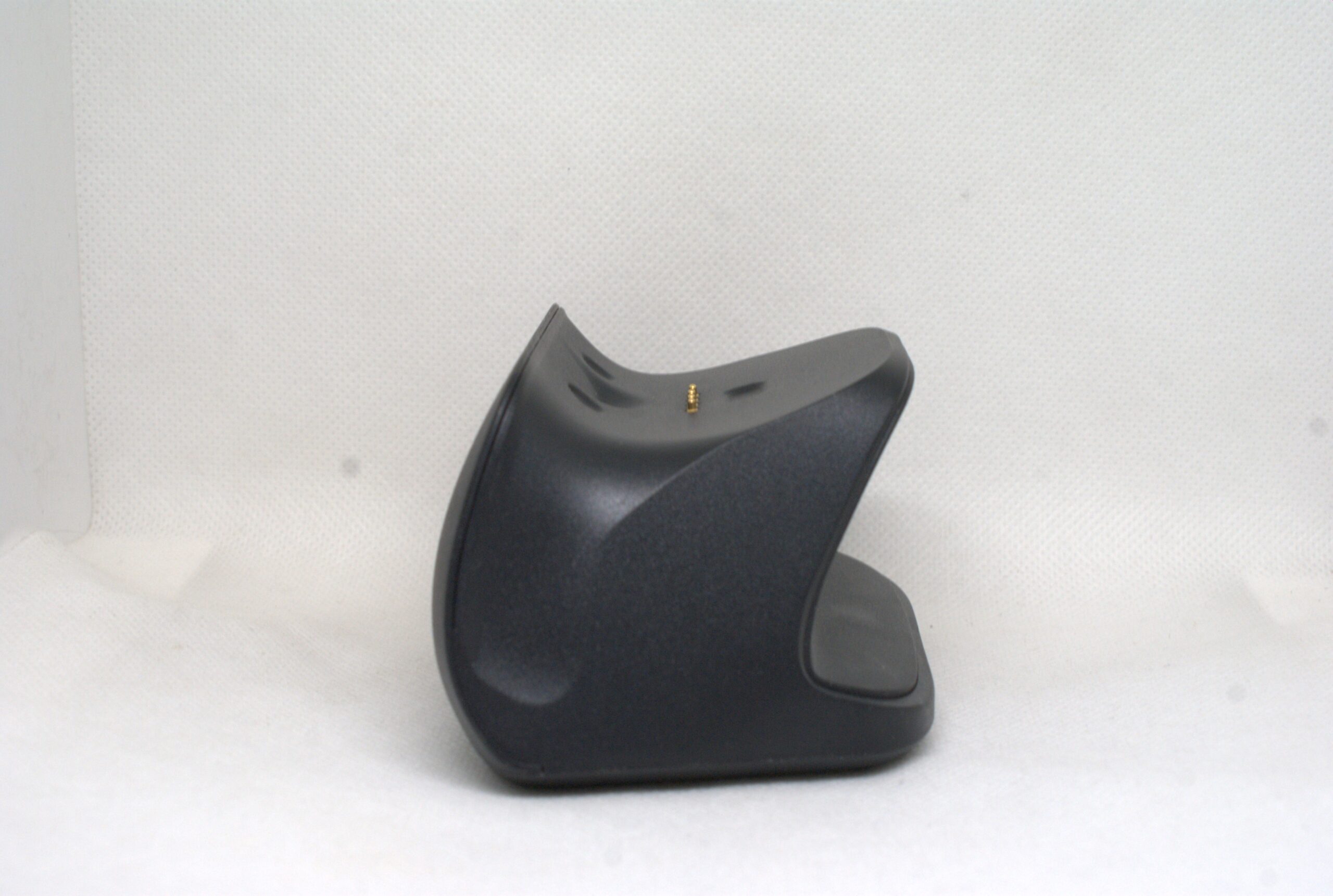
Moving on to the controller itself, it offers classic G7 series ergonomics, with slightly longer grips with a slightly shallower angle of attack, which makes it fit perfectly in your hands, regardless of grip, and sits securely in your hands. The grips themselves are rubberized on both sides, a pleasantly firm material that doesn’t cause discomfort after long sessions and is easy to clean. It’s also worth mentioning that the G7 Pro is fully compatible with the faceplates of the good old G7 HE and G7 SE. The only difference is that the faceplate in today’s test subject is divided into three parts, two of which are rubberized.
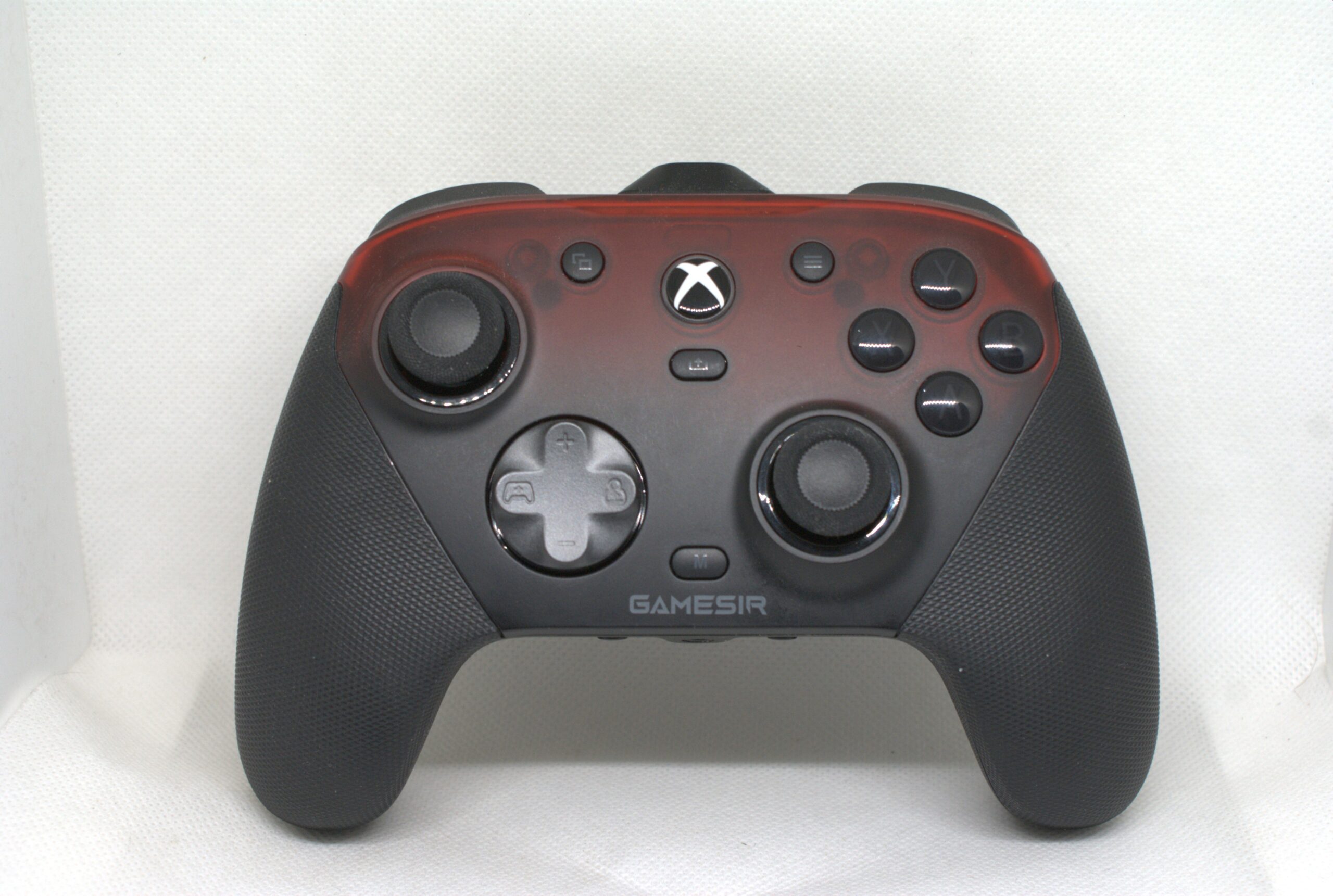
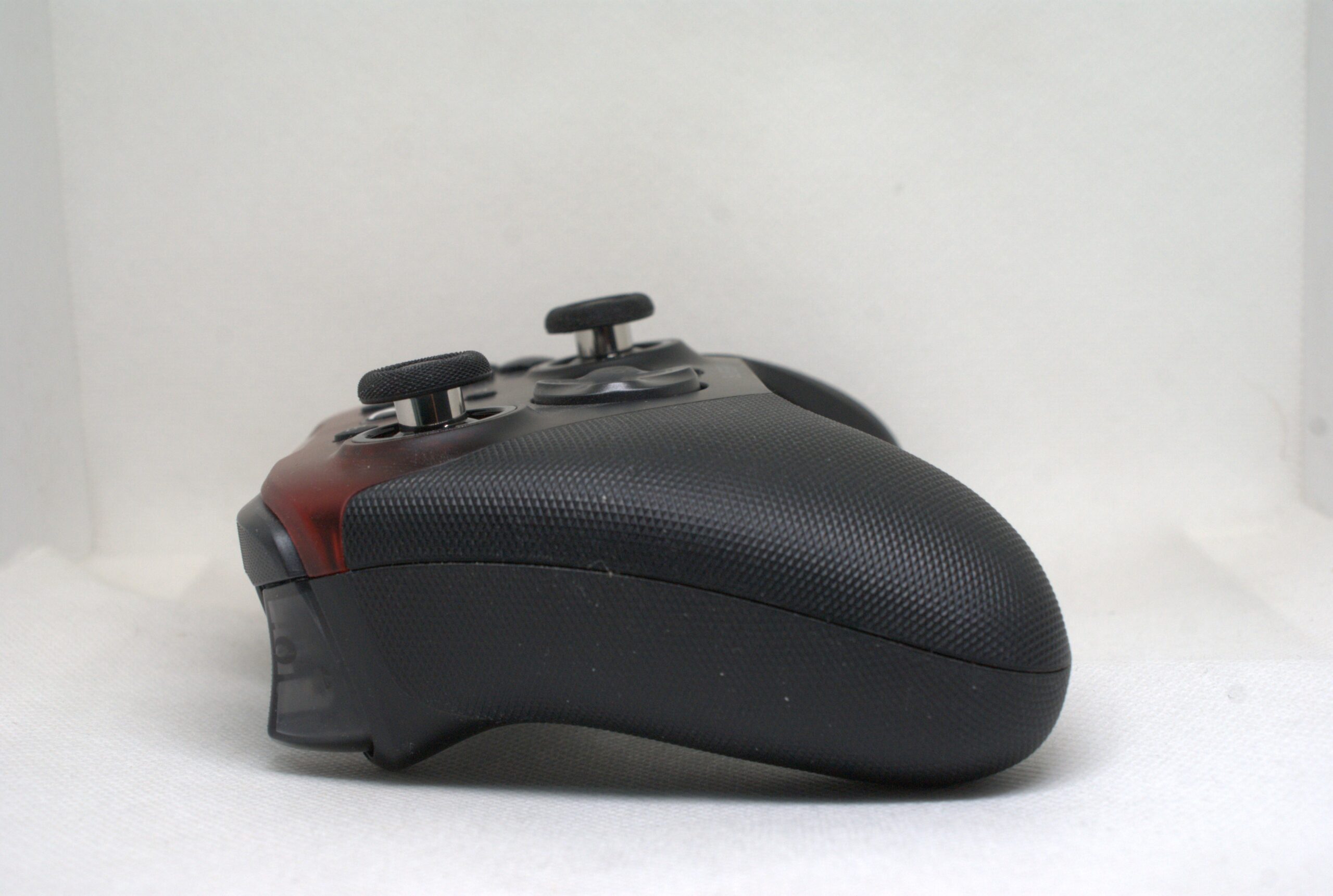
Turning our attention to the analog controllers, we have the K-Silver JS16, though not completely stock, but slightly modified. A significant improvement is the re-setting mechanism, which likely maintains center better due to tighter tolerances between components. Additionally, the analogue itself is significantly lighter, the spring is more linear, and the mechanism operates more smoothly. This may be due to better lubrication, or perhaps more significant design changes.
Of course, these analogues have received all the benefits of anti-friction rings and POM rings are noticeable. In terms of smoothness of movement at the edges, the G7 Pro generally performs very well. Of course, it’s not a level of internal restriction, but I personally don’t see it as a drawback. Of course, the smoothness of analog is important, but up to a certain point – a level where it doesn’t affect the ease of input and maintaining stability. The analog sticks themselves are quite pleasantly rubberized, and your fingers grip well, but unfortunately, they’re quite a magnet for dirt.
Moving on to the ABXY switches, we have optical switches. In terms of feel, they’re honestly excellent. The fact that they have a noticeable membrane above them, however, rather than being detrimental, actually improves the overall tactility of the switch. Furthermore, they’re perfectly balanced in terms of pre-travel and firmness. As for the D-Pad, it’s rather average. I wouldn’t say weak, as I really like the approach – using microswitches with direct contact between the cap and the switch, without an additional membrane. However, I think it’s a bit too light and the travel is too low. Unfortunately, I also think the wobble on the cap itself is too high, which also affects comfort. Of course, modders have found a way to fix this (using an O-ring), but let’s be honest – the wobble shouldn’t be visible from the factory.
Moving on to the top, we find four elements worth noting. First and foremost, the triggers. This design is based on classic Hall sensors. Their tuning is simply brilliant – the attack angles and profile are excellent. The spring travel and stiffness are also excellent. The bumpers are a rather classic design, with a relatively light but sharply felt travel. However, the design is close to that of the Cyclone 2; I didn’t notice any significant difference between the two models in this regard.
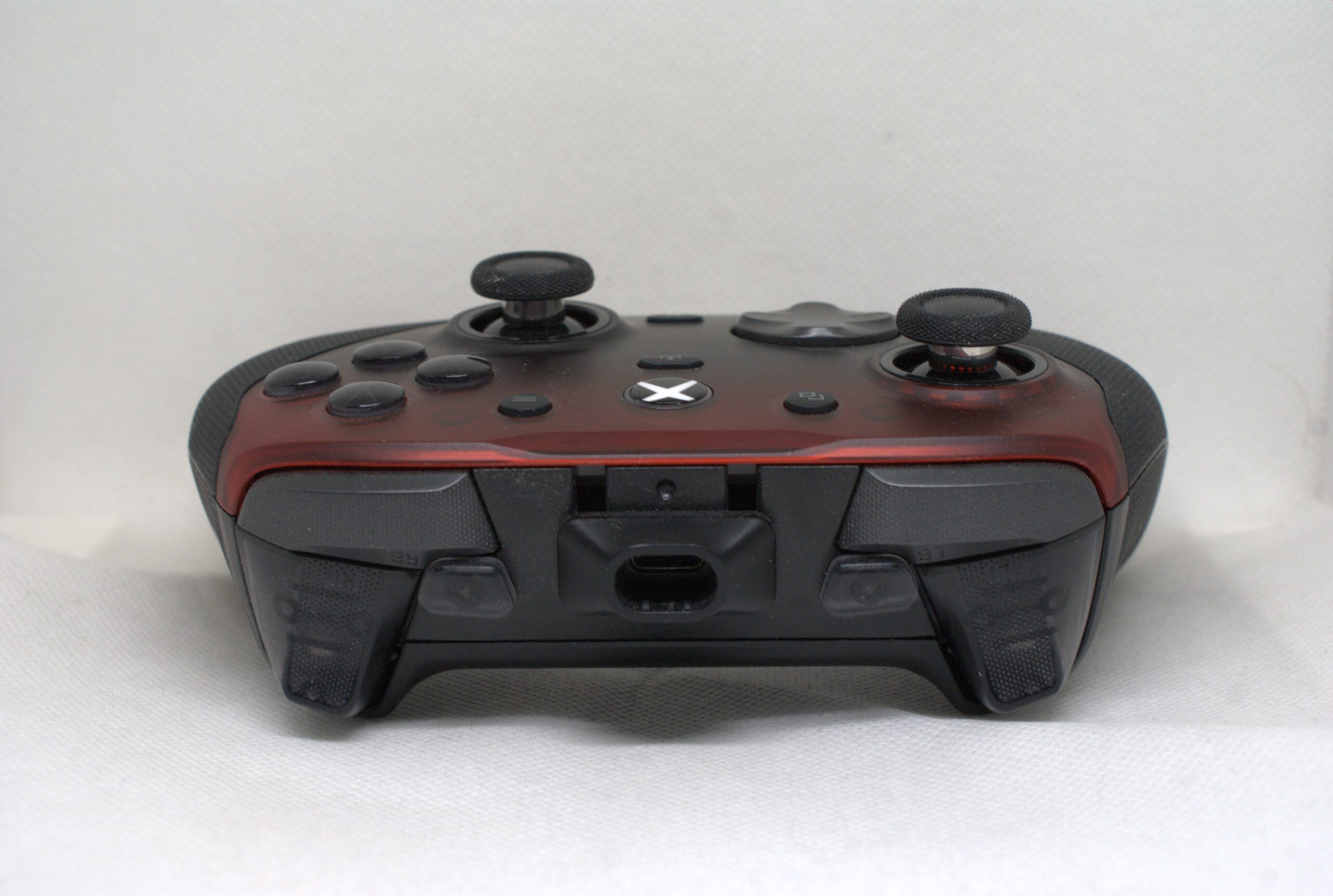
The third interesting element are the remappable switches. These are based on computer mouse-style switches. They have a relatively low and light travel and quite pleasant tactility. They’re also located in a way that makes it rather difficult to accidentally press them. Another noteworthy feature is the USB port. More specifically, it’s an interesting addition designed to protect the cable from breaking. There’s not much to say about it, but it’s nice of the manufacturer to have considered cable makers.
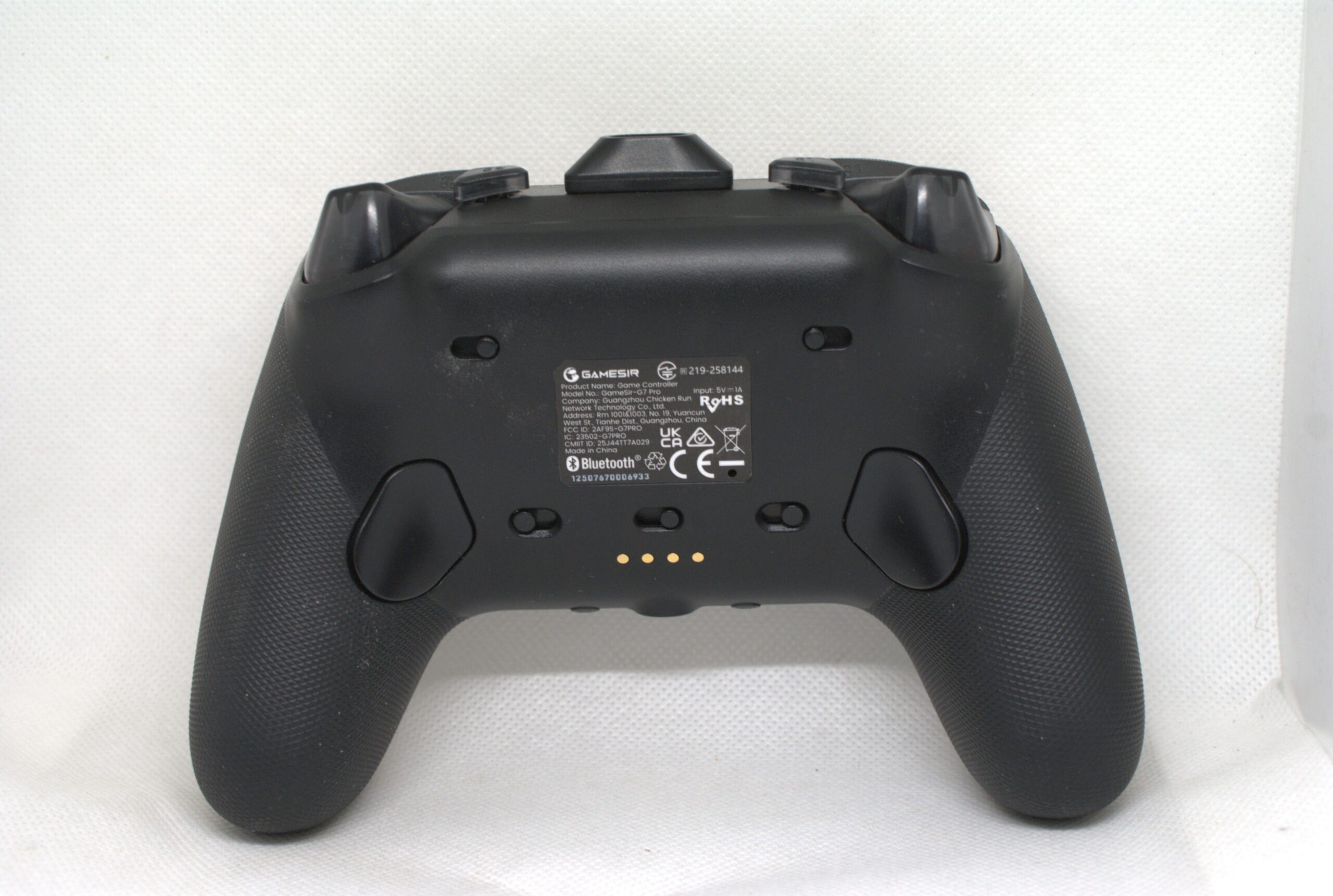
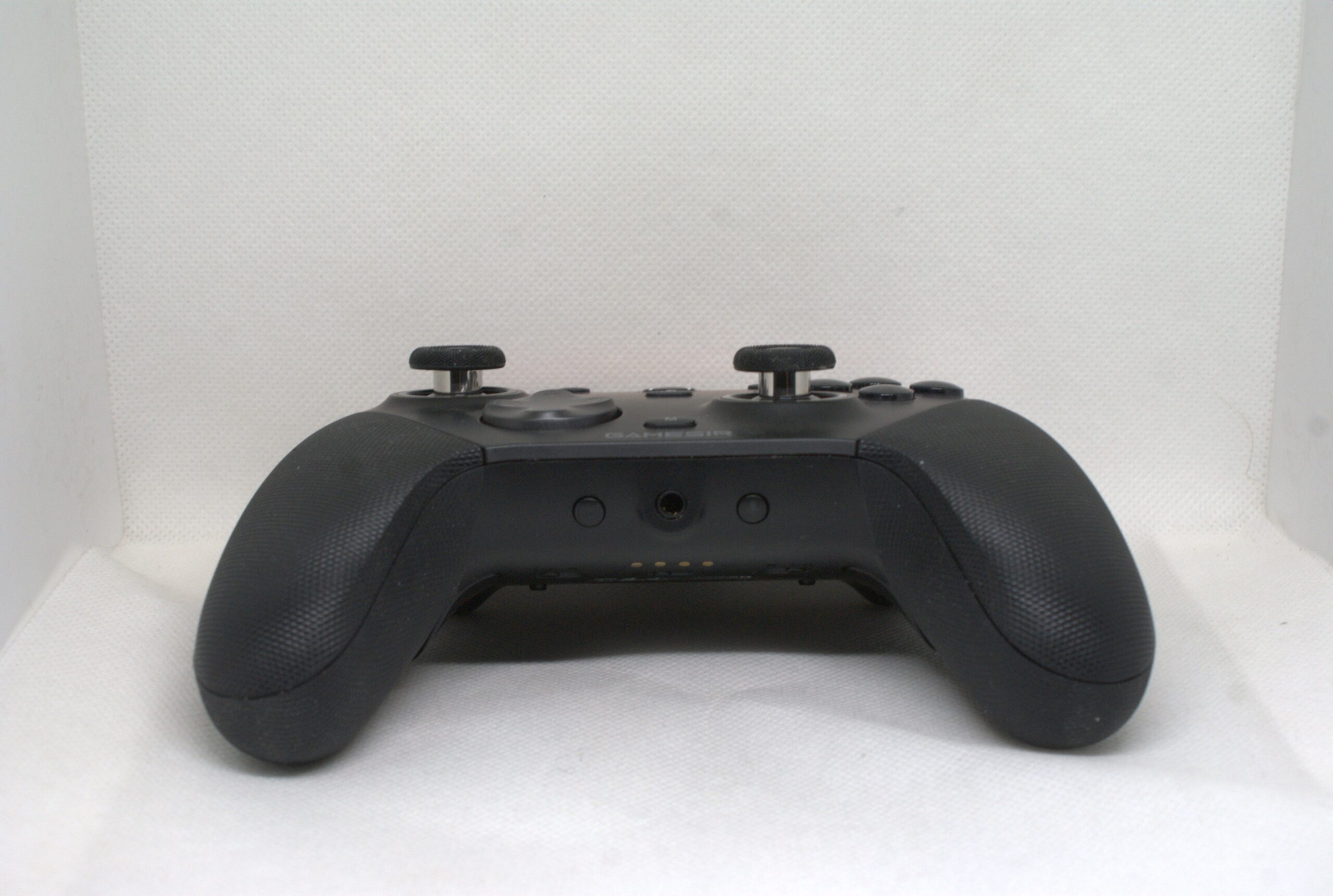
At the back, in addition to the mode switch, there are two paddles. They’re medium-sized, but perfectly placed. Their operation is rather light and linear, though I wouldn’t say unpleasant. Additionally, there’s a locking mechanism – perhaps not as advanced as the Tarantula Pro, but still there. At the bottom, we have the audio jack.
Synthetic tests
I’ll admit, due to a bit of laziness and lack of time, I didn’t tear down the G7 Pro. Not that I’d even need to with the new methodology. So, as for that – the G7 Pro performs excellently in our tests. 2 ms on the wired switches and around 6 ms wirelessly, in both cases at a 1000 Hz polling rate, put it among the fastest controllers. Even Bluetooth doesn’t disappoint (apart from the fact that it only has Dinput), as it also has around 6 ms.
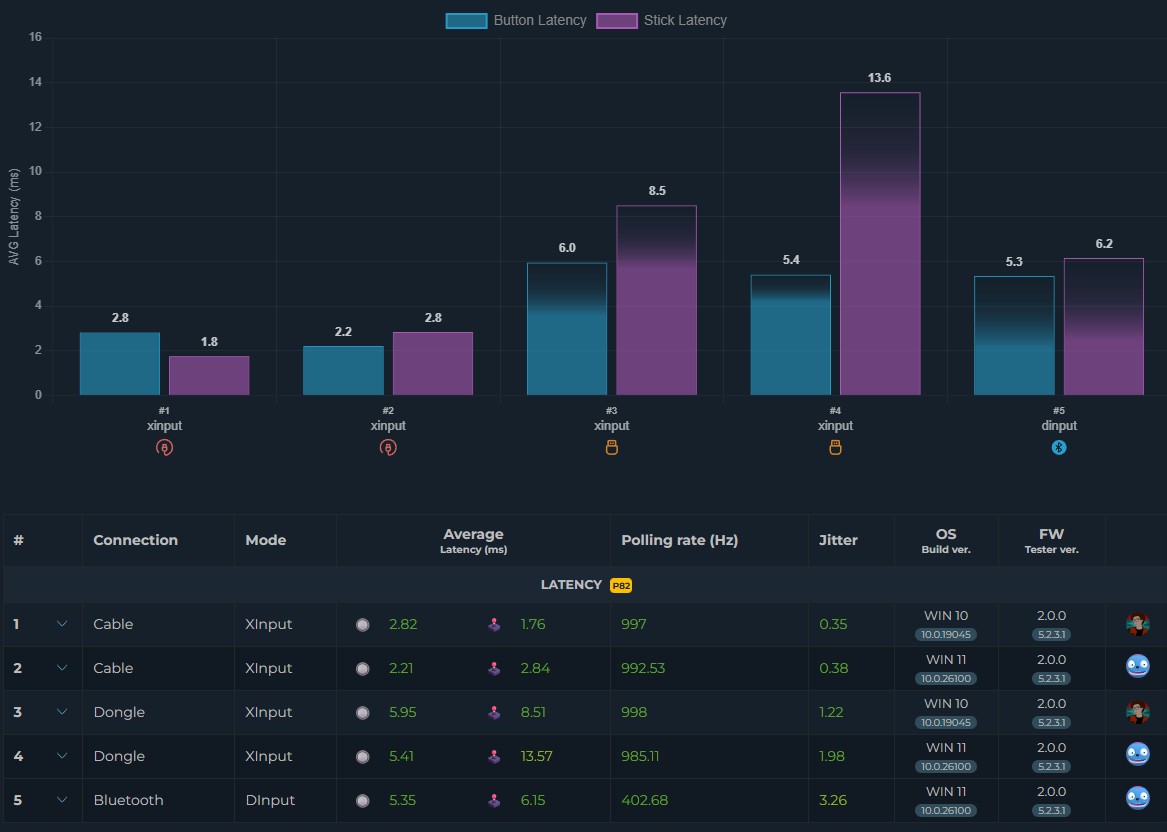
The analog latency is also excellent. Wired latency is virtually non-existent, and wireless latency is minimal – around 8-10 ms. Even Bluetooth performs excellently, with a result around 6 ms.
The analog calibration, as with all modern models from this manufacturer, is excellent. The external dead zone is almost perfectly symmetrical, and re-recording is excellent. The analogs offer 12-bit resolution (although in this case it’s around 1250 positions, not “true” 12-bit, which is 2048 positions). There are no unwanted dead zones or anything like that either. Raw mode, aside from changing circularity, doesn’t change anything in real-world use.
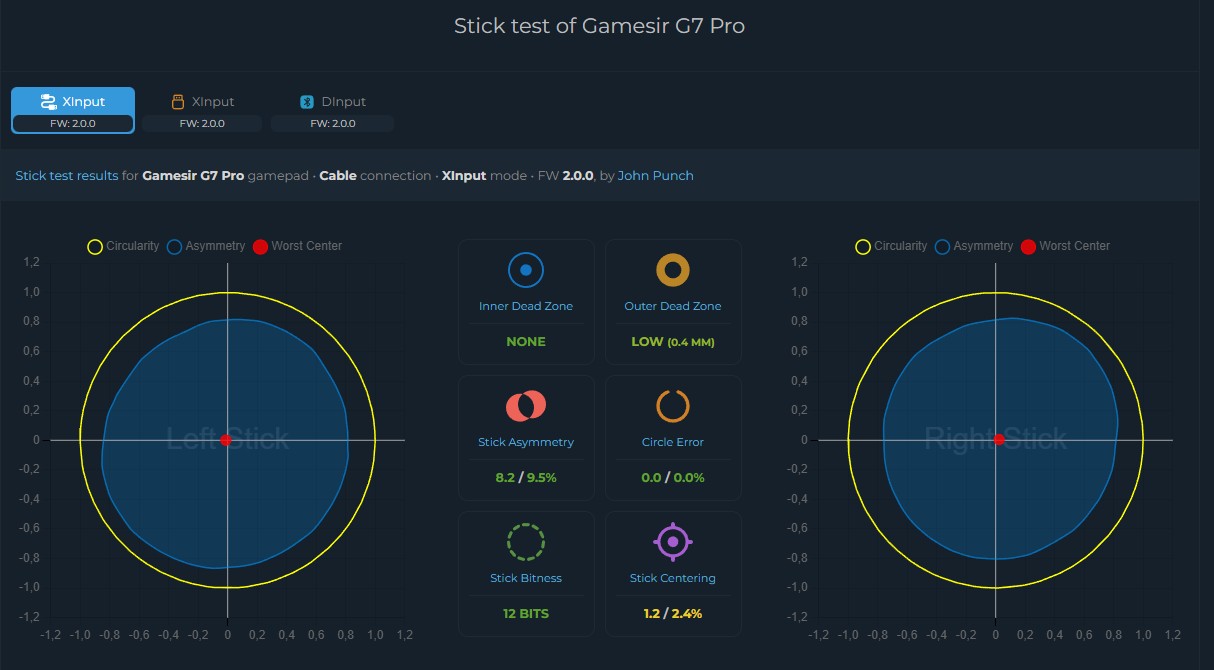
Unfortunately, I wasn’t able to verify the analog stick linearity perfectly, but from what my tests and those of other testers have indicated, the G7 Pro is good enough to require no manual compensation.
As for battery life, it’s expected to last around 10-12 hours, but I had a hard time checking it due to my habit of leaving the controller on the dock.
Software – Gamesir Nexus app
The GameSir Nexus app is used to manage the G7 Pro. I didn’t notice any significant differences between it and GameSir Connect, used for models like the Cyclone 2 or SuperNova (aside from the fact that it’s available on the console). Overall, the app is quite well-made, clear, and quite easy to use. Since there aren’t any significant differences, I recommend checking out the reviews of those models to see what they look like.
Summary of GameSir G7 Pro
As someone who, I freely admit, has been involved in the development of this controller since the beta testing, I can say that the G7 Pro It’s been a tough road. The manufacturer has strived to perfect it down to the last detail so that they can release the best possible product for the end customer. And personally, I see no reason to say that’s a bad thing, as in my (very subjective) opinion, this model deserves to be called the best Xbox controller from Microsoft.
If I had to nitpick, it would definitely be the rather flimsy D-Pad and the clashing color of the Home button.
This review was made possible thanks to GameSir.
✅ Pros
- Brilliant TMR analogs and HE triggers
- Great switches
- Very good performance on synthetics (latency and calibration)
❌ Cons
- Average D-Pad feel
- Home button in clashing colors