If you spend long hours typing, chances are you have considered lighter switches at some point. A lower operating force means your fingers have to do less work with every keystroke, which can help reduce fatigue during long typing sessions. Fortunately, there are plenty of lightweight switches to choose from these days.
But what if you do most of your typing in an open office and do not want to disturb the people around you? Or perhaps you tend to type late into the night at home and do not want to wake anyone? In that case, being light may not be enough – you might want your switches to be quiet as well. That narrows the selection considerably. That’s where the Epomaker Roseveil comes in: a linear switch designed to be light on the fingers and soft on the ears. So let’s get into what they actually feel like to type on.
Pricing and Packaging
The Epomaker Roseveil switches are sold in packs of 35 for $16.99, which works out to roughly $0.49 per switch. That is fairly middle-of-the-road pricing for mechanical switches, sitting comfortably between the more budget-oriented options and the more expensive ones. On top of that, Epomaker frequently runs site-wide sales and promotions, so there is a very realistic chance you can snag them at an even lower price.
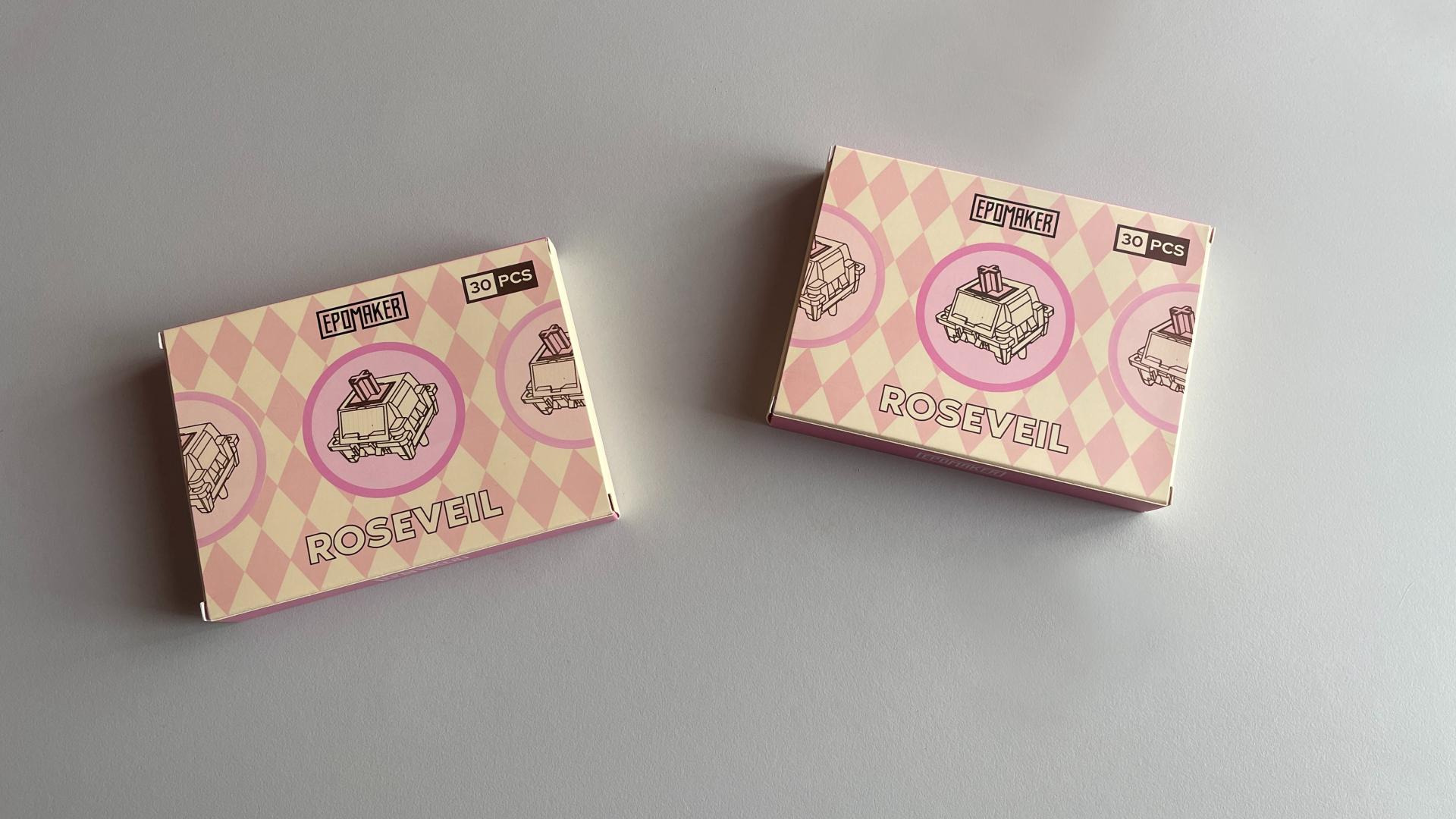
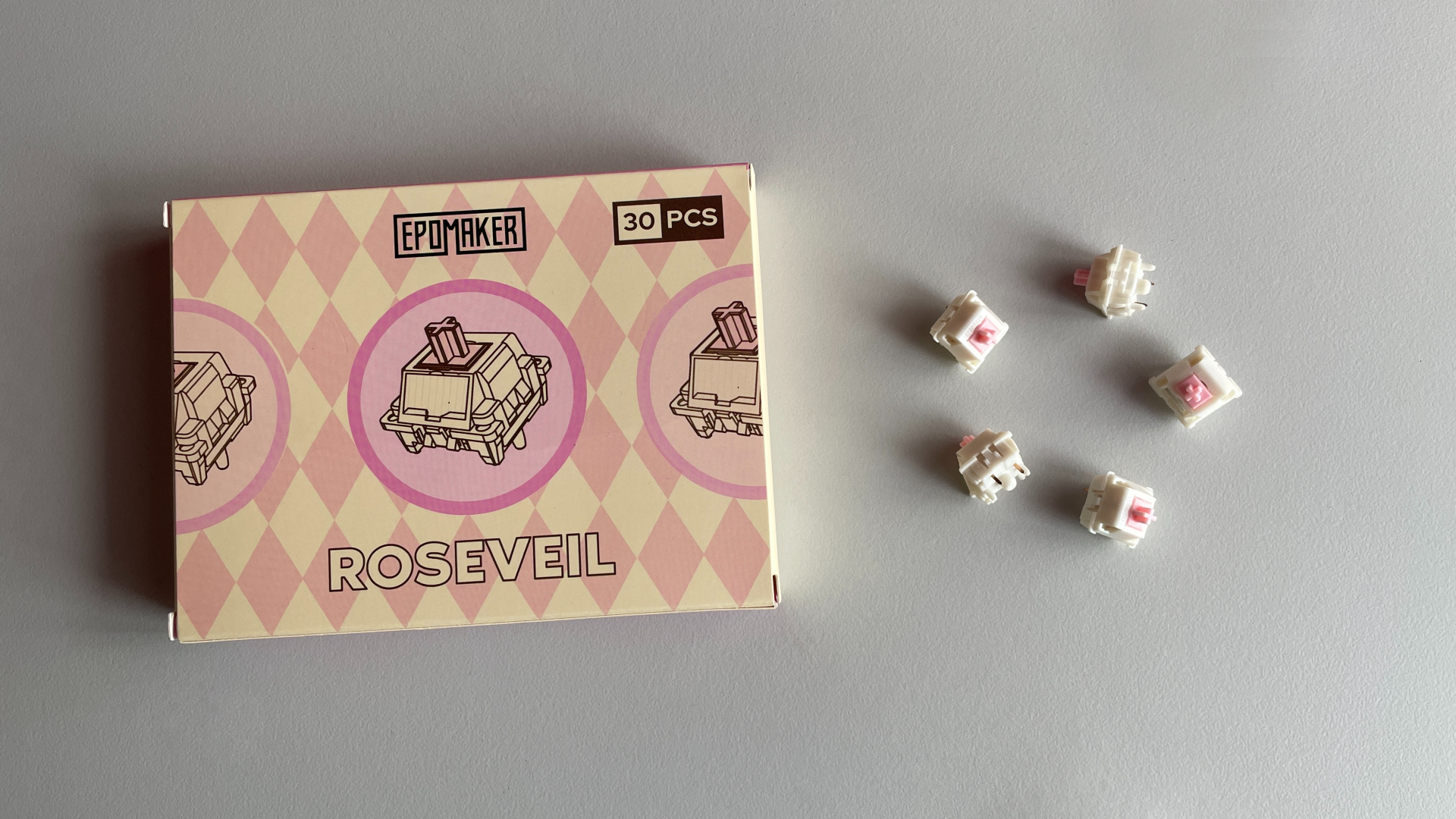
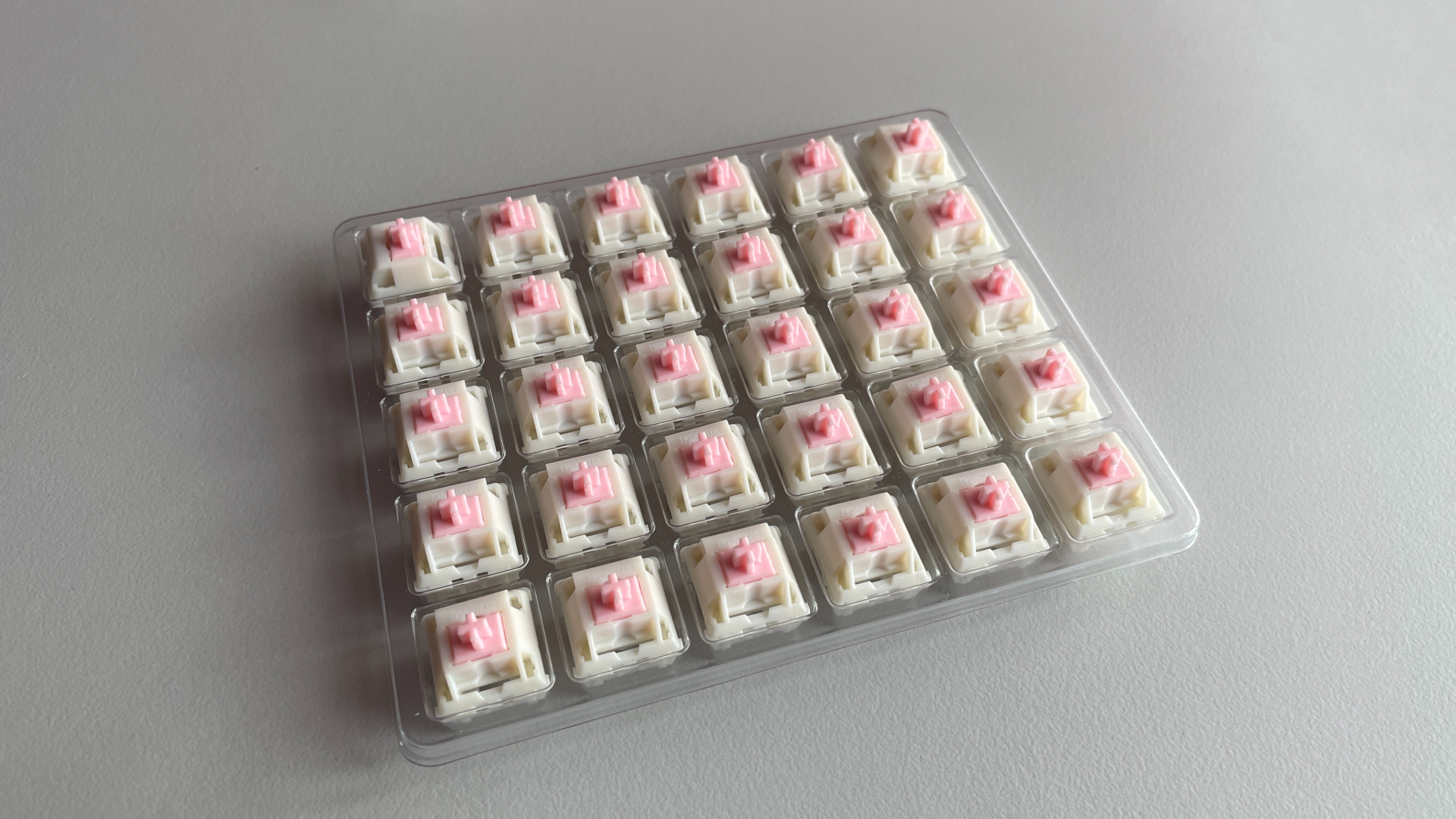
As for the packaging, the switches arrive in a small cardboard box with a plastic tray inside. The presentation is fairly straightforward, but it certainly does not feel cheap. The tray itself is made from noticeably thicker and more rigid plastic than the flimsy ones I sometimes see included with switches.
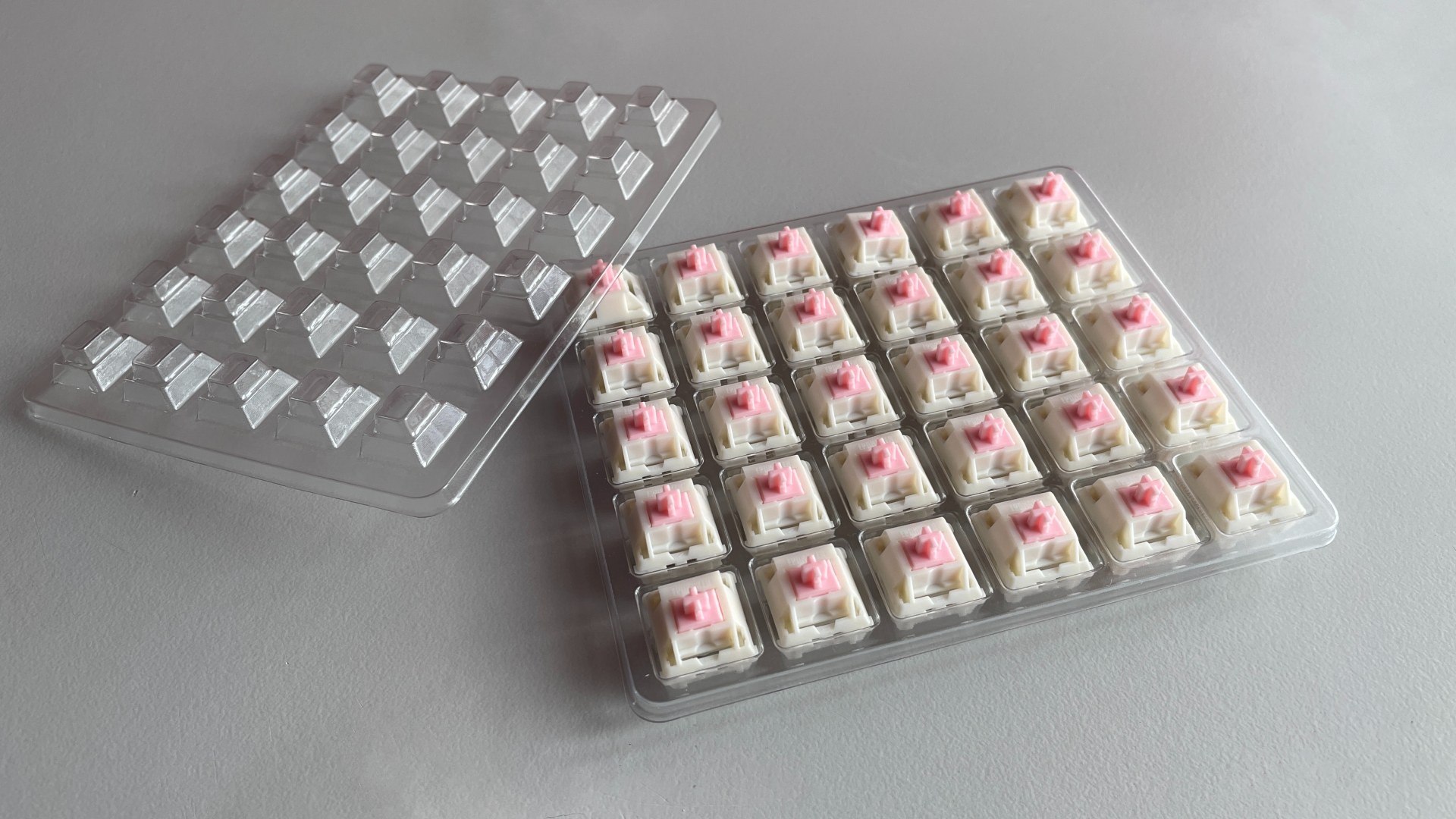
Each switch sits securely in its own dedicated slot, giving me complete peace of mind that the pins will not get bent or damaged during shipping. The tray is also perfectly suitable for storing the switches afterward, so overall, there is very little to complain about here.
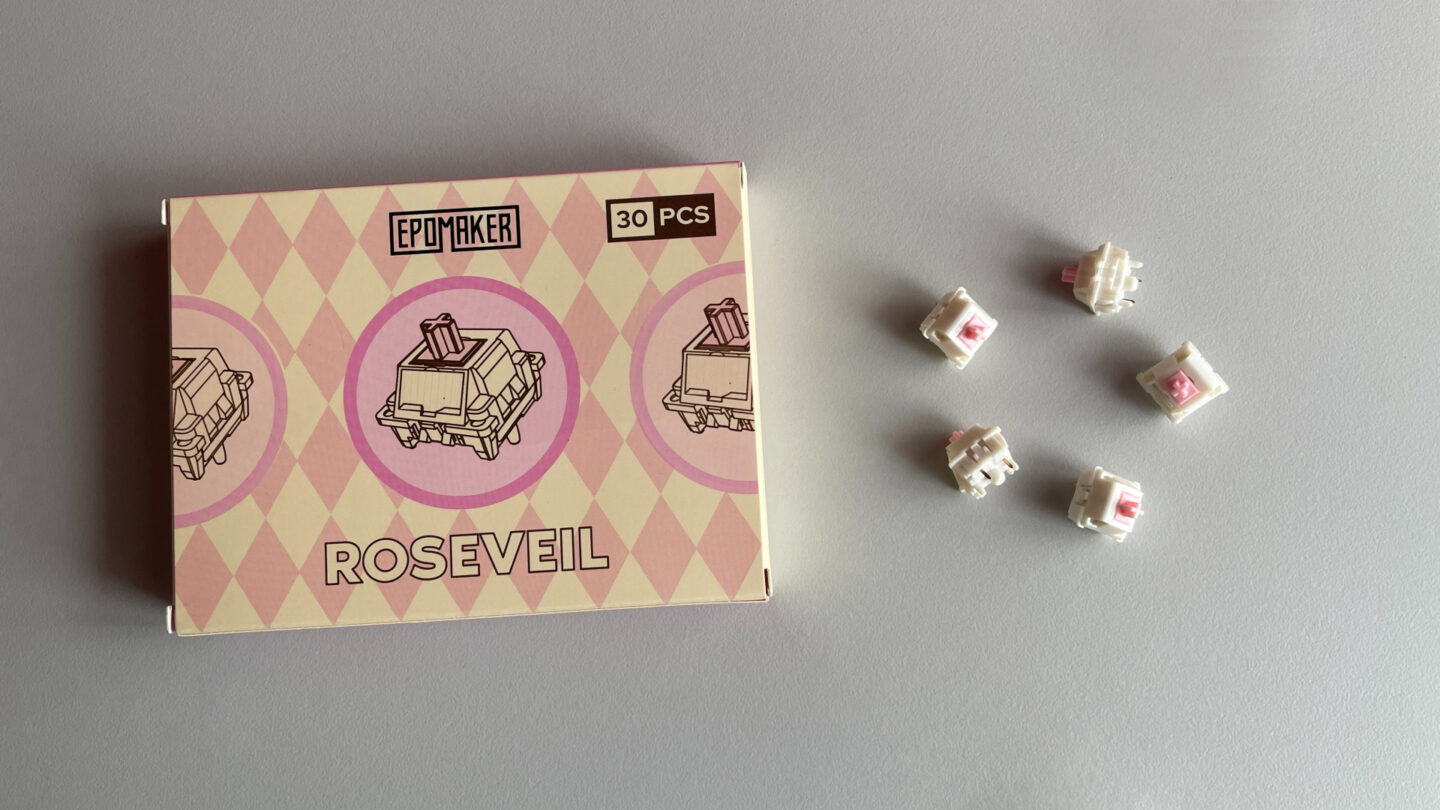
My set comes from one of the first batches, back when the switches were sold in boxes of 30. So if you notice only 30 switches in the box shown in my photos, that is why. The switches themselves are otherwise no different from the ones now sold in packs of 35.
Appearance
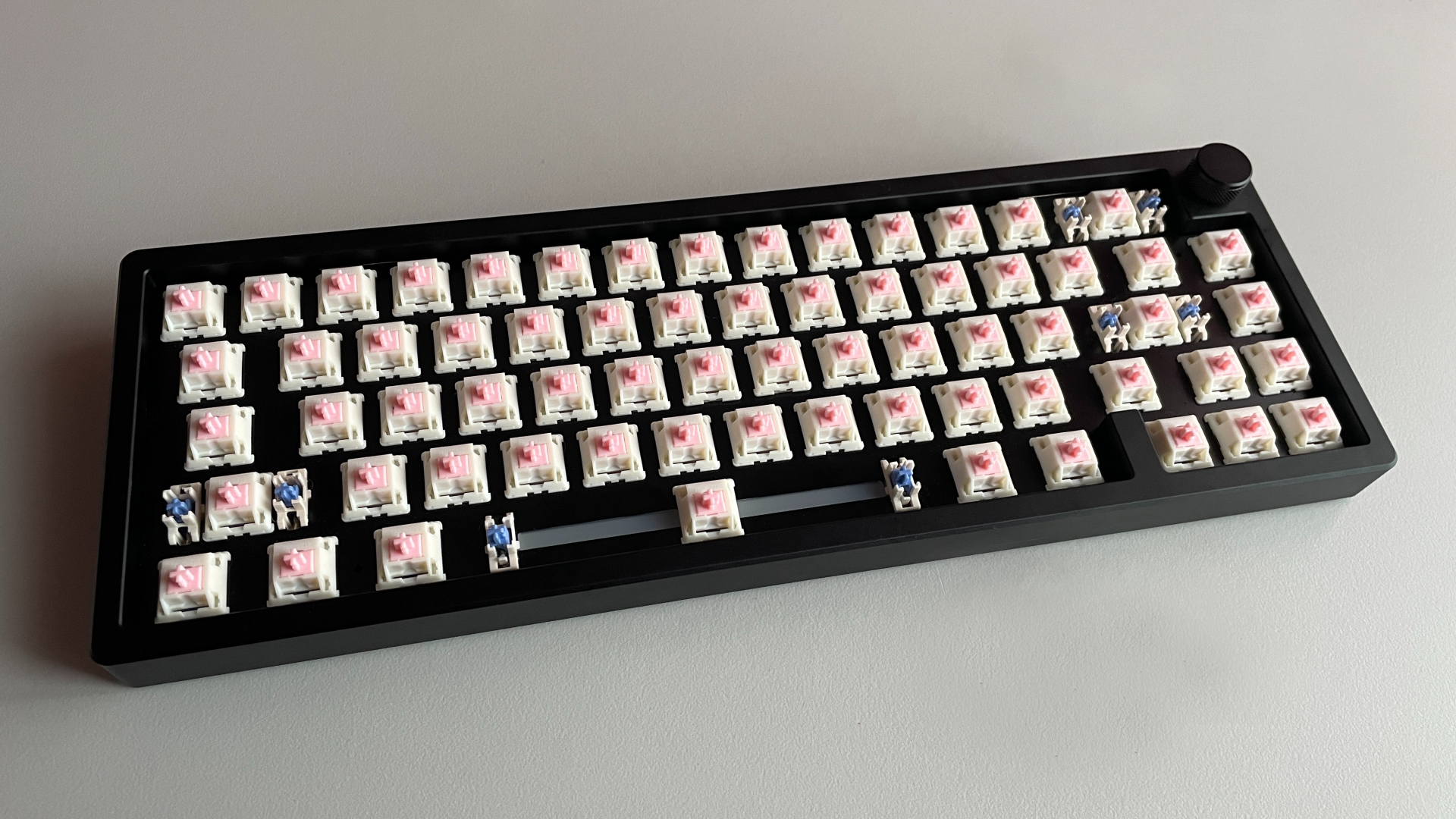
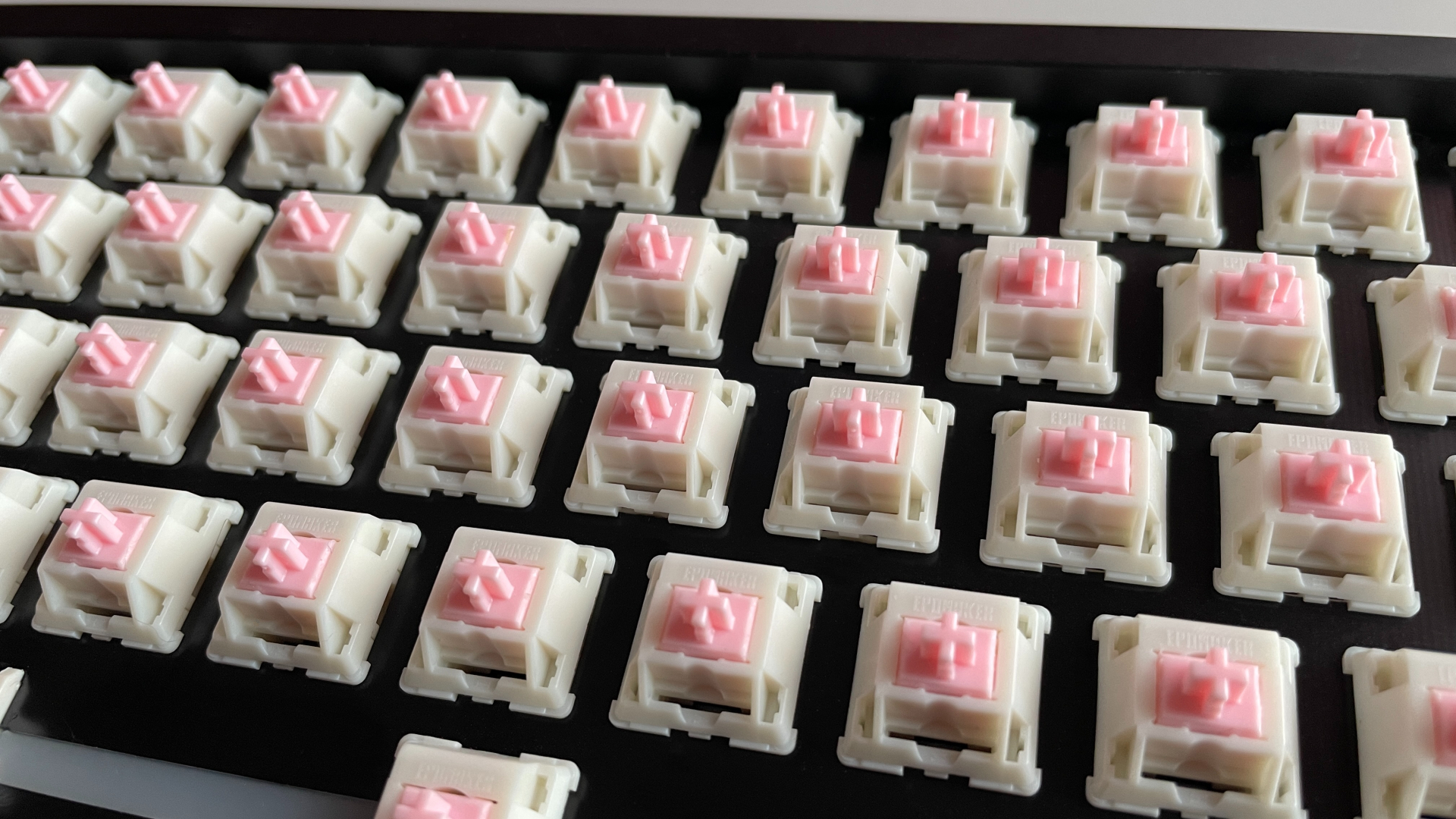
The Epomaker Roseveil is a standard-profile MX-style mechanical switch featuring a 4-clip housing design and a 5-pin PCB mount. The stem uses the traditional MX cross mount, so compatibility with third-party keycap sets should not be an issue.
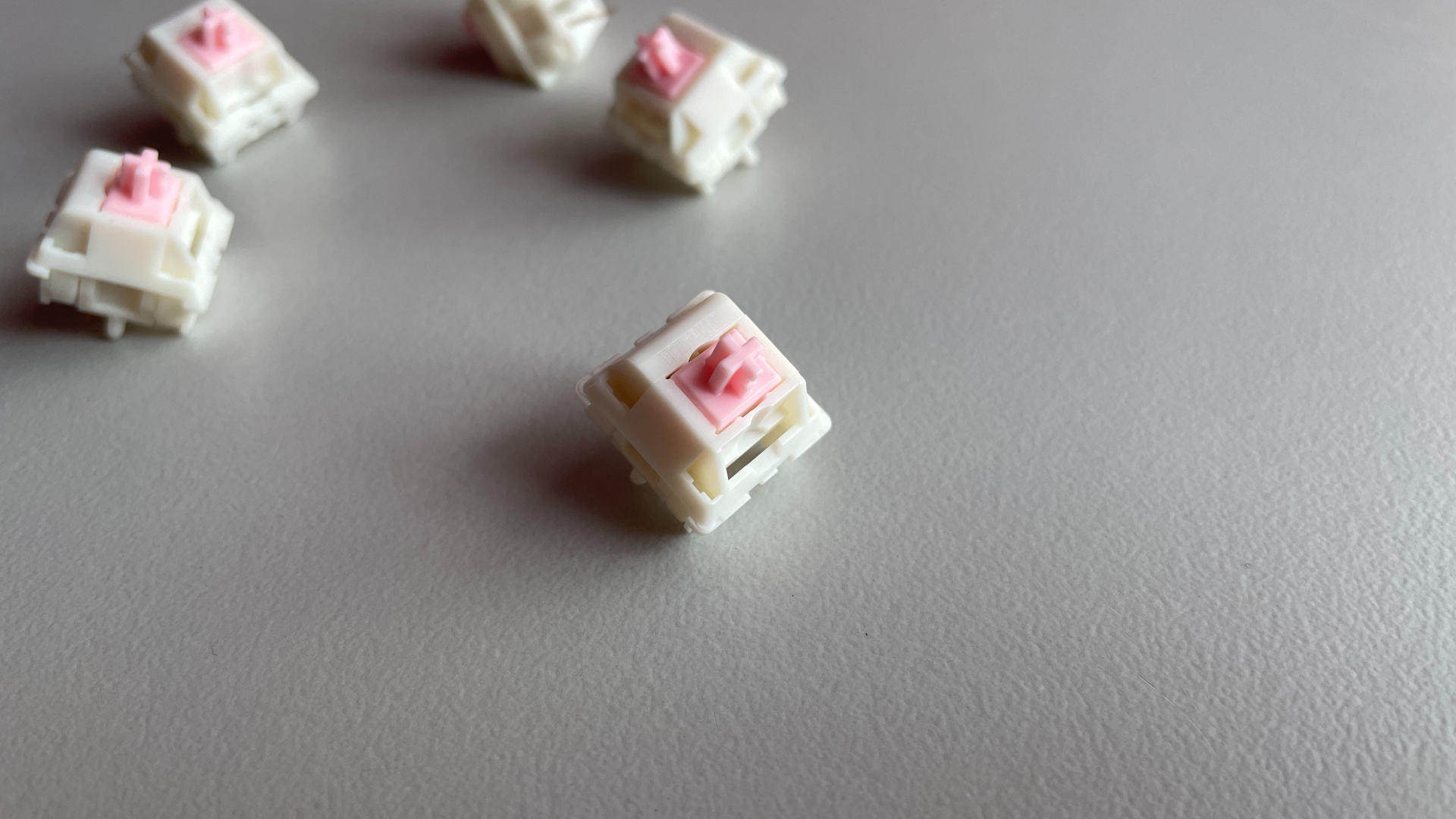
The switch pairs a soft, milky-white PC housing with a pale pink LY stem. It’s a clean and understated color scheme that quietly evokes the aesthetic of pink-and-white roses, which feels like a very fitting nod to the “Roseveil” name.
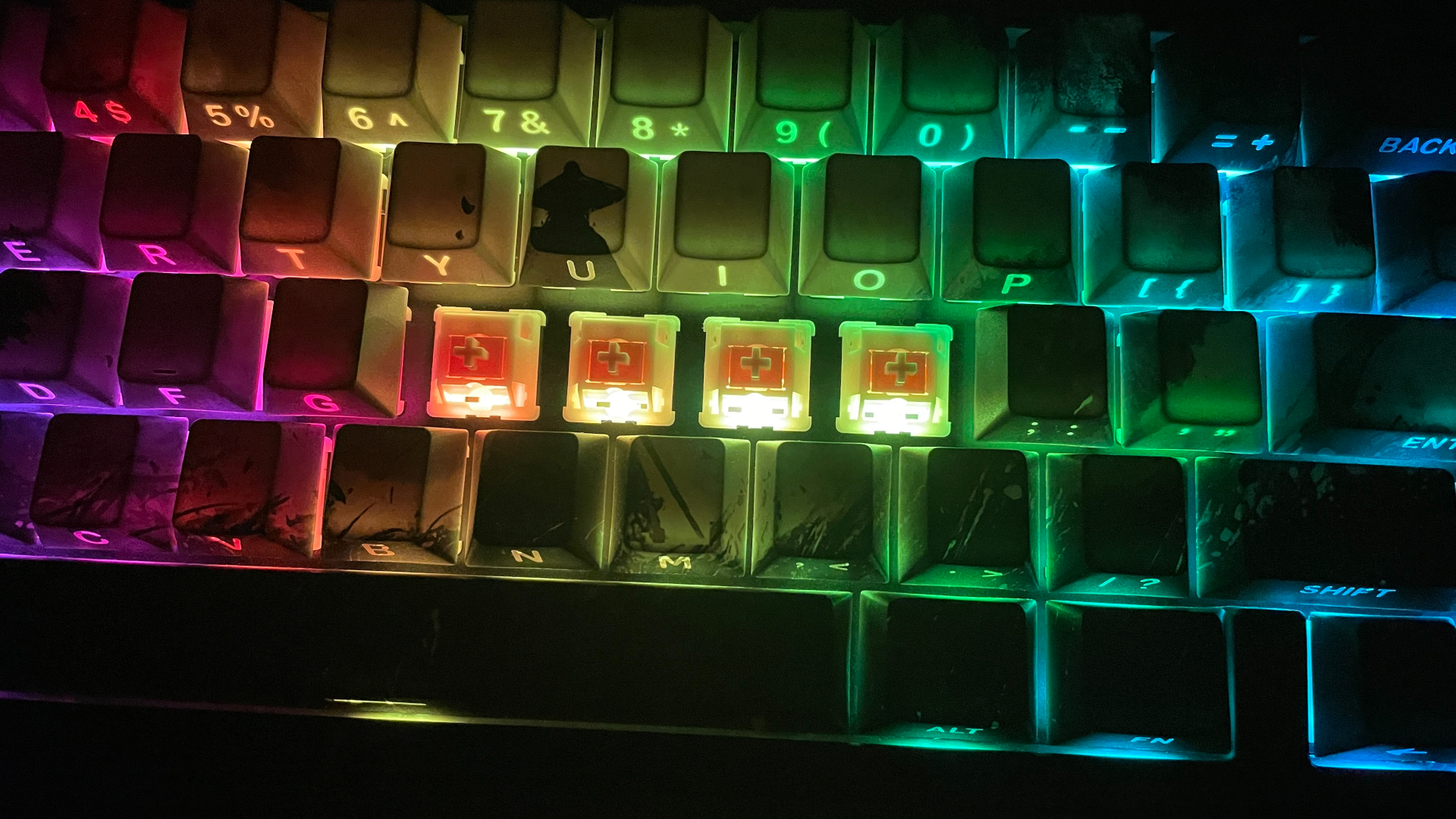
The housing itself is made from non-transparent plastic, and there is no dedicated LED diffuser. As a result, RGB light does not pass through the switch as freely as it would with a transparent housing or a dedicated light diffuser. That said, the light-colored plastic is not completely light-blocking either, so some illumination still makes its way through. If strong, vivid RGB lighting is a major priority for you, or if your keyboard already has relatively weak backlighting, this is something worth keeping in mind.
Feel
The way the Roseveil switches feel is probably their second defining characteristic after the obvious focus on silence, because they combine two traits that work particularly well together.
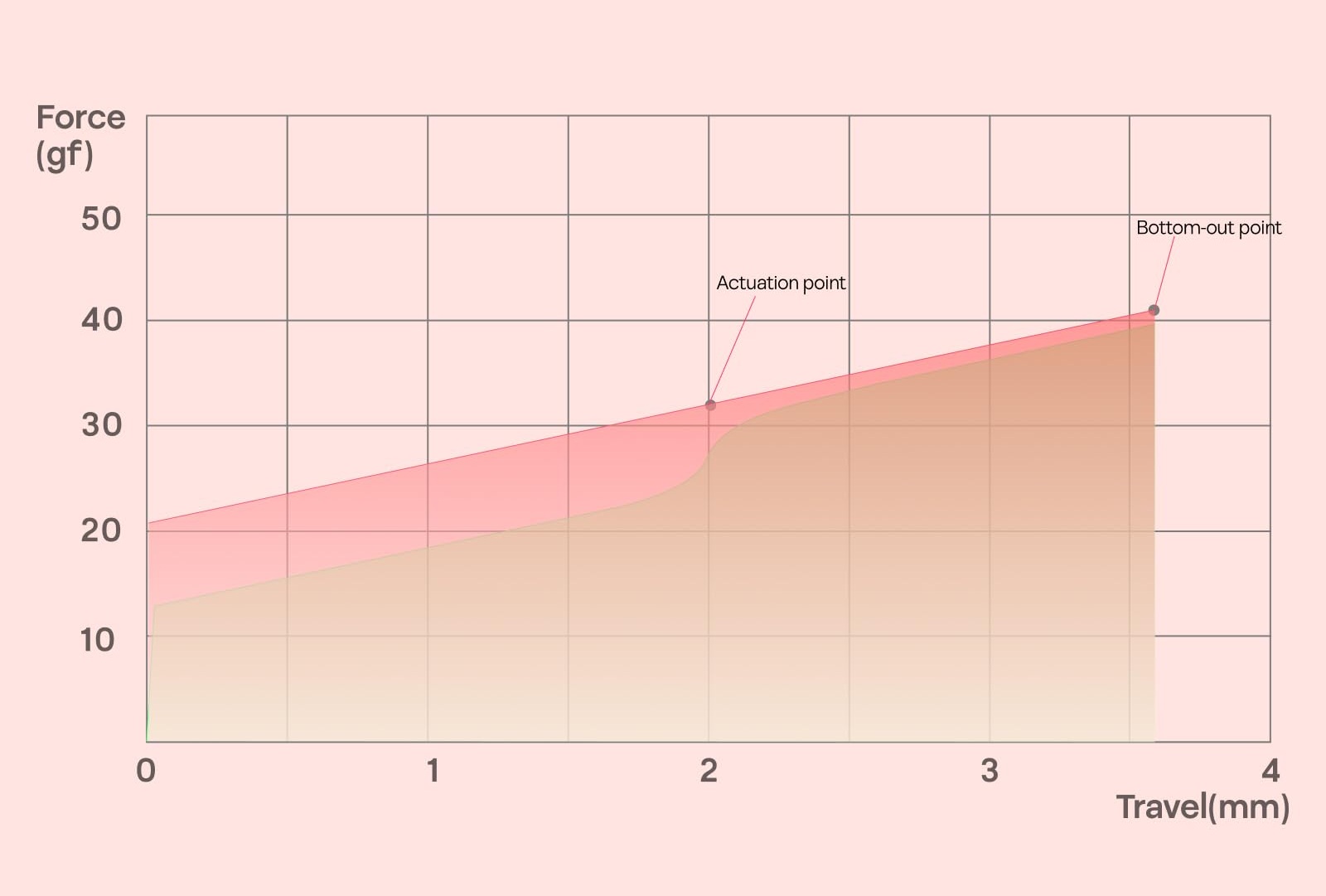
Most silent switches rely on a silicone damper (or similar impact-absorbing material) somewhere in the switch mechanism to absorb the harsh physical impact at the end of the travel to keep the noise down. The side effect is that the bottom-out itself becomes softer as well, and the Roseveil is no exception. But what makes it more interesting is that Epomaker combines this softened bottom-out with a very lightweight spring. The switch has a 32 gf actuation force and a 41 gf bottom-out force.
So these are the two characteristics that define its feel: a very lightweight spring paired with a cushioned bottom-out. On top of that, the factory lubrication is excellent, with the travel feeling consistently smooth and free of any noticeable scratchiness. Stem wobble is also kept to a minimum, which helps the switch feel more stable.
The result is an extremely light, smooth, and effortless keystroke, with a bottom-out that feels slightly softened and cushioned. Epomaker also managed to strike a very good balance here, because the switch never feels excessively mushy. The bottom-out is soft and comfortable, but I can still clearly feel the moment the stem reaches the end of its travel.
There is a real synergy between the very light spring and the cushioned bottom-out that comes with the silent design. This combination makes typing remarkably effortless, and in my case that even translated into a higher typing speed. I also experience far less finger fatigue after long sessions. That relief, I think, comes not just from the light actuation, but also from that gentler, cushioned bottom-out.
By the way, if your keyboard is not gasket-mounted, the Roseveil can be a great way to soften up the typing experience a bit.
Sound
When it comes to silent switches, it may seem like there is not much to talk about – after all, they are supposed to be quiet. But the reality is far from it, and the gap between a good silent switch and a poor one is actually massive.
I have come across supposedly “silent” switches in the past that were noticeably scratchy. Once the usual bottom-out sound is gone, that scratchiness can become the most prominent thing you hear with every keystroke, which completely ruins the whole point of a silent switch in the first place. Poorly lubricated springs can introduce ping as well, and some switches manage to keep the downstroke quiet while producing noticeably more noise on the upstroke. So there is actually quite a lot to pay attention to here.
Fortunately, the Epomaker Roseveils avoid all of these pitfalls. Both the downstroke and the upstroke are extremely quiet. There is no scratchiness to draw your attention, and I haven’t noticed even a hint of spring ping. They are genuinely quiet switches that deliver exactly what they promise, making them a perfect choice if you want to build a keyboard that won’t disturb sleeping family members during late-night typing sessions or coworkers in a shared office.
Who Is the Roseveil For?
All in all, the Epomaker Roseveil switches have proven to be exceptionally quiet, smooth, and just enjoyable to type on. Naturally, I would recommend them to anyone who wants to keep keyboard noise to a minimum, whether that means avoiding disturbing coworkers in an office or waking up someone at home during late-night typing.
But silence is not the only reason to consider the Roseveils. I would also recommend them to anyone looking for a very smooth and lightweight linear switch. That combination can make them a good option for gamers as well, especially those who prefer lighter, responsive switches and don’t want the clatter of keys distracting them from the game.
Finally, the Roseveil is a particularly interesting choice for anyone who spends a lot of time typing and wants to reduce finger fatigue. The light spring requires very little effort with each press, while the cushioned bottom-out softens the impact at the end of the travel. This combination makes long typing sessions noticeably more comfortable and less demanding on the fingers. They can also be useful in keyboards with a firmer mounting system, where the softened bottom-out adds some welcome cushioning to an otherwise more rigid typing feel.

Controller and mechanical keyboard enthusiast. Tech reviewer, regularly sharing thoughts about gadgets and computer peripherals.