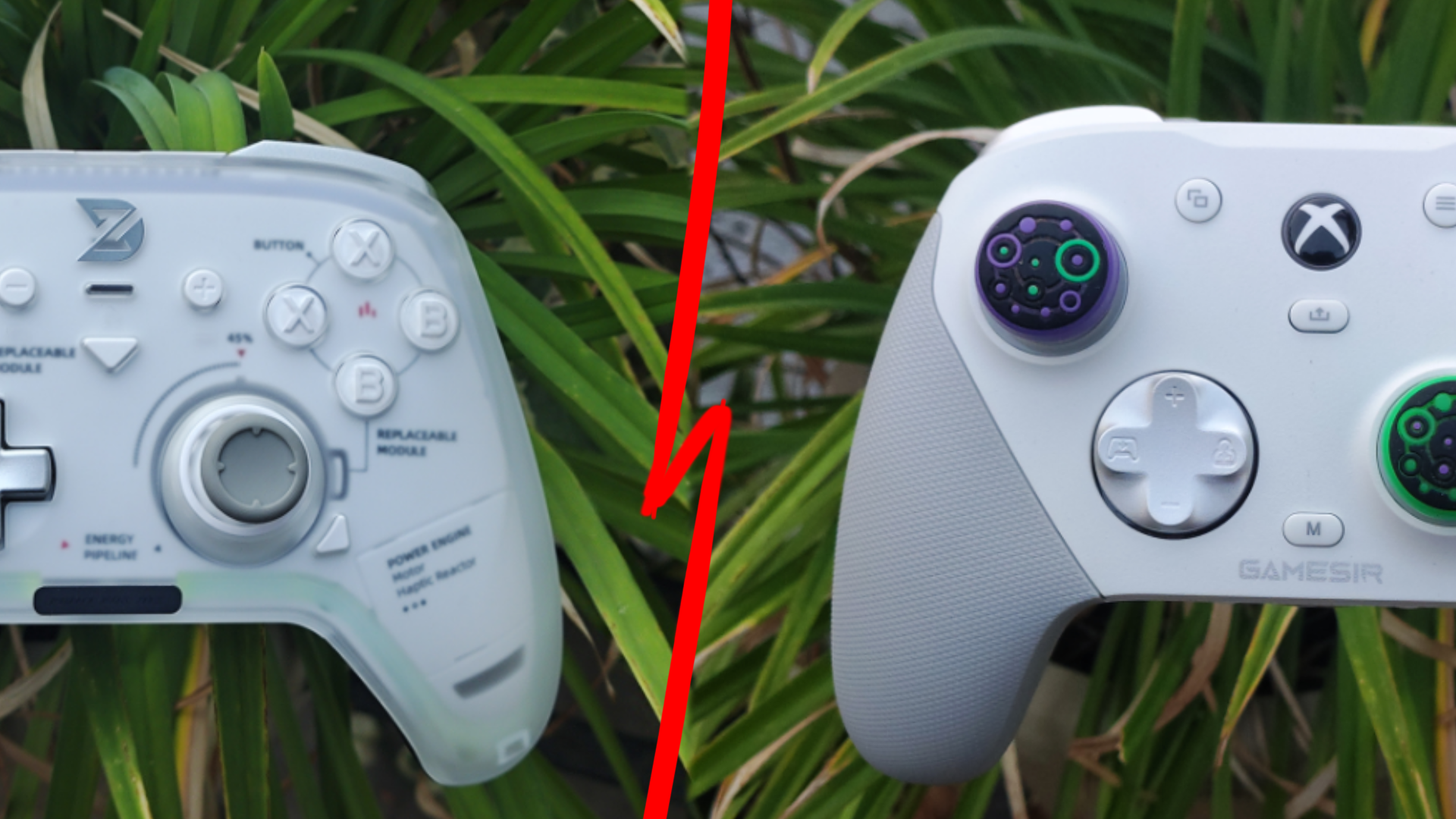
Following the warmly received ZD O+ Excellence, the company has released its new flagship model – the Ultimate Legend, based on a very similar philosophy: (presumably) “Let the engineers unleash their imagination.” Did they manage to deliver and offer a controller worthy of your attention? Let’s find out in the second part of this high-end saga of ZD product reviews.
Packaging
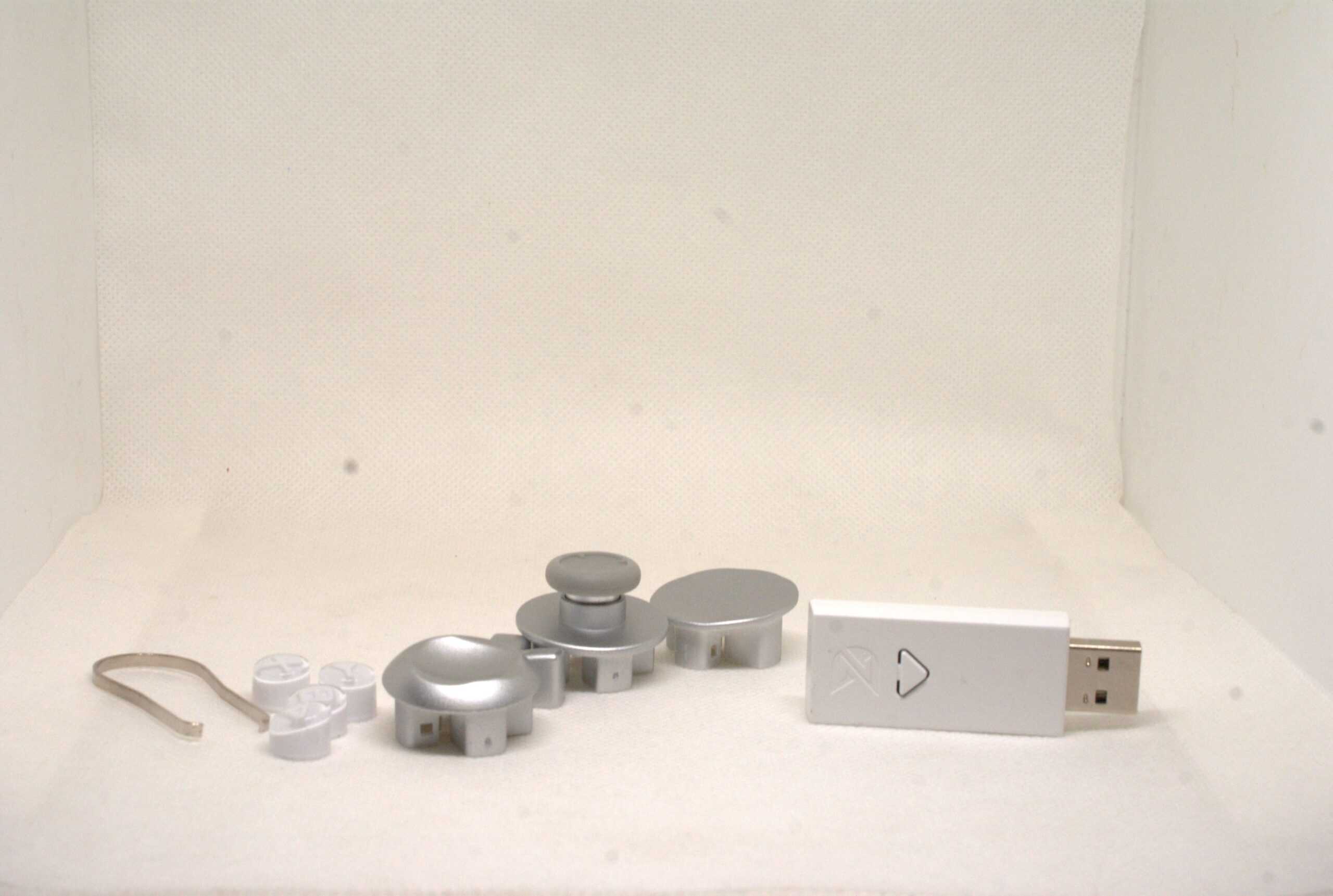
The controller arrives quite neatly packaged. On the front of the packaging, we find a render of the controller with a list of basic features, and on the back, a slightly more detailed description. After removing the dust jacket, inside a white box, we find the controller itself and the 2.4 GHz receiver. Beneath them, we find paperwork, additional D-Pads, switch caps, and a USB-C cable. If you’re wondering why this review doesn’t include photos of the packaging, the reason is simple: I can’t find them at the moment.
Specifications
- Layout: Xbox/Switch (variable)
- Compatibility: PC, Mobile, Nintendo Switch (both 1 and 2)
- Connectivity: Wired, 2.4 GHz, Bluetooth
- Analog: Ginfull TMR (default)
- Triggers: Hall Effect with trigger lock
- Main Switches: Mechanical
- Secondary Switches: 4 on the back + 2 on the top + 2 on the front
- Gyroscope: Present
- Vibration Motors: 2 asymmetric + HD rumble + 2 in the triggers
- Battery: 1500 mAh
- Polling Rate: 3000 Hz wired, 1000 Hz 2.4 GHz
- Available Colors: White
- Docking Station: Sold Separately
- Price: 100$
Specifications are based on the manufacturer’s website and our own observations.
Initial Impressions and Observations
Starting with the dongle – it’s a comically simple design, a simple cuboid with a button and a USB plug; there’s nothing special about it. Due to my laziness, I’ll probably skip the dock, because although I received it for testing, aside from having two additional USB ports, I didn’t find anything interesting about it.


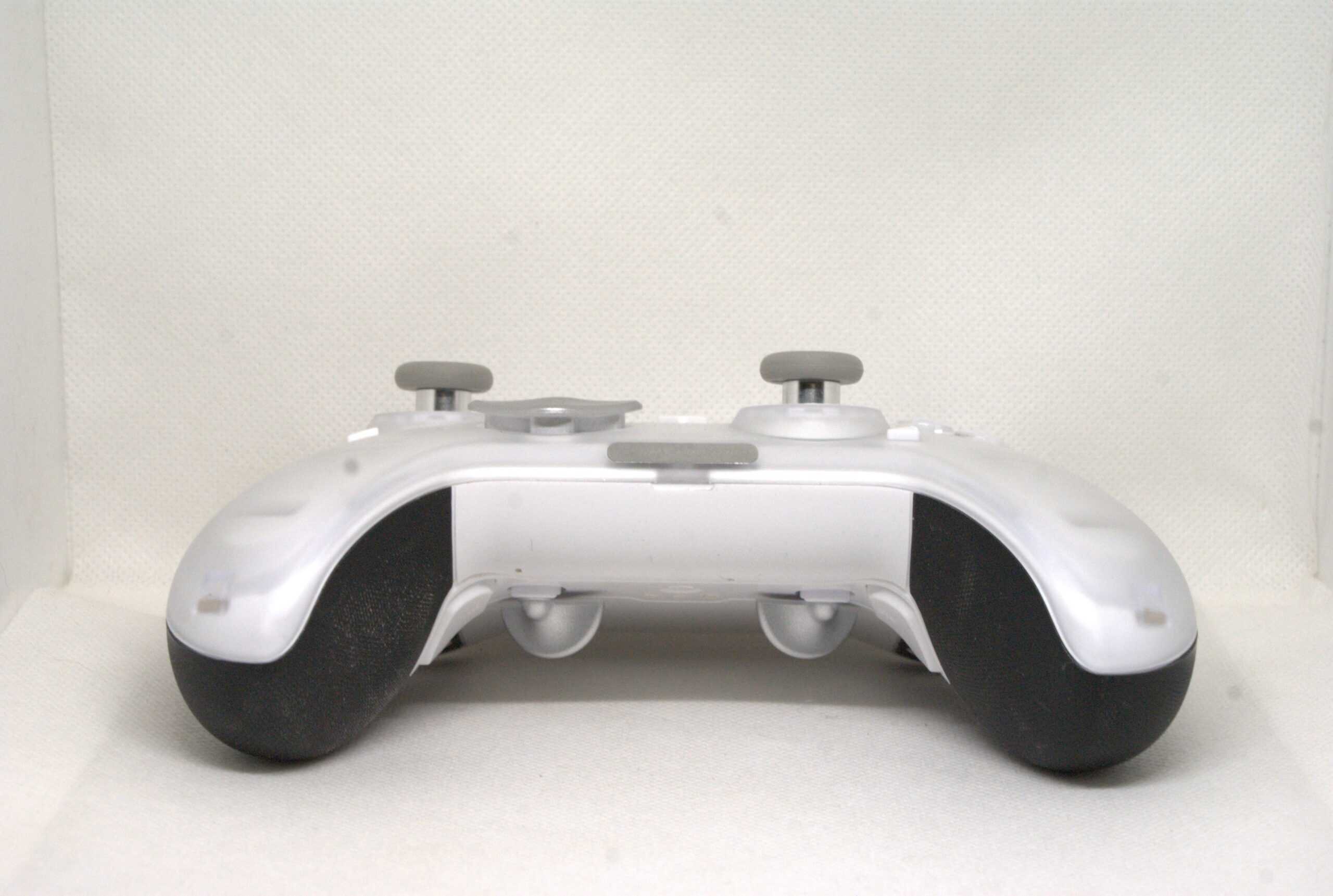
The controller itself is a different story, as it has a lot of interesting features. Starting with the ergonomics – the shape isn’t overly aggressive, and the grips are small but rubberized. It feels decent in the hand, lies rather securely, and doesn’t feel like it’s about to slip out of your hands. The faceplate itself is removable, and – as far as I know (and I don’t feel like checking, to be honest) – additional faceplates are available.
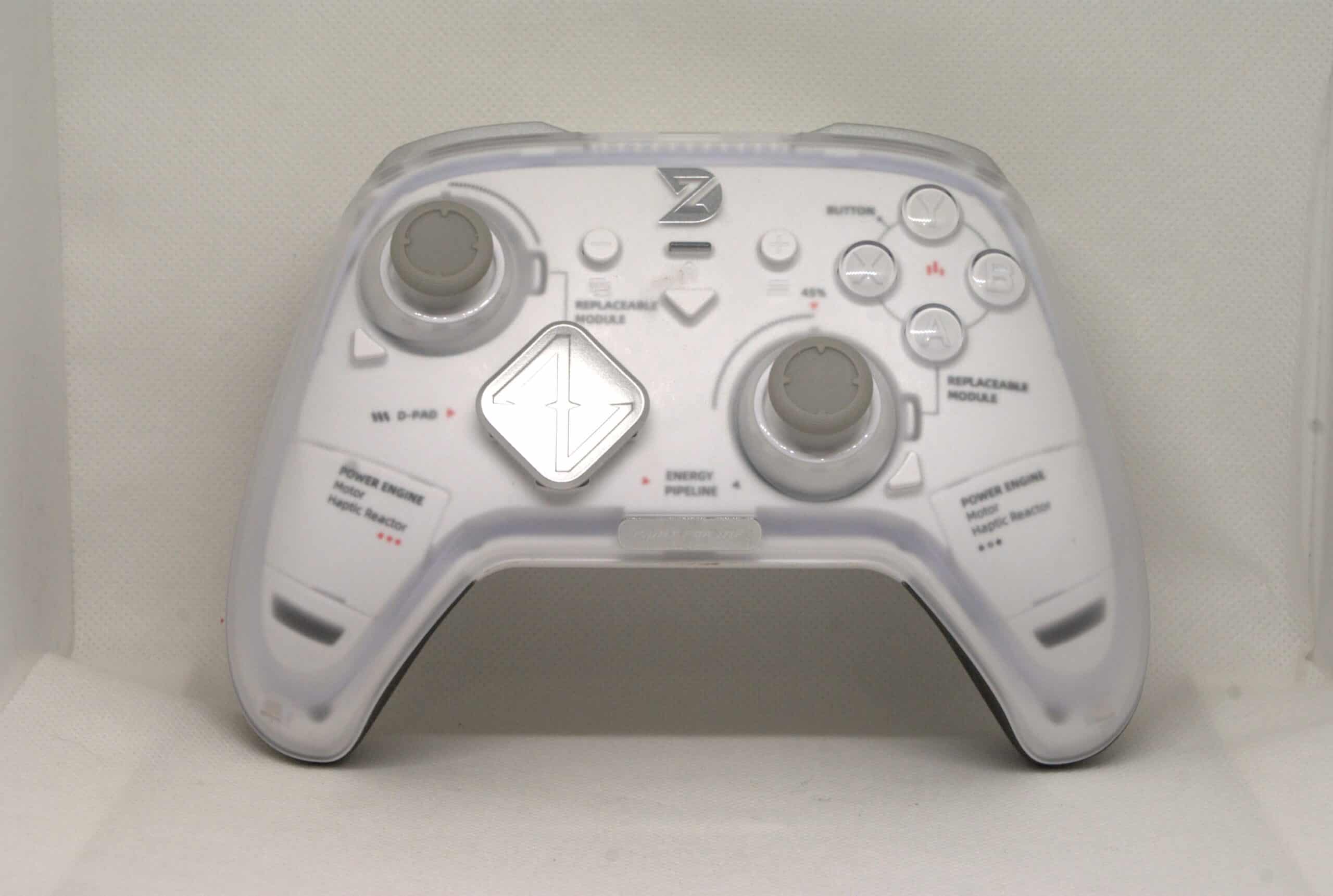
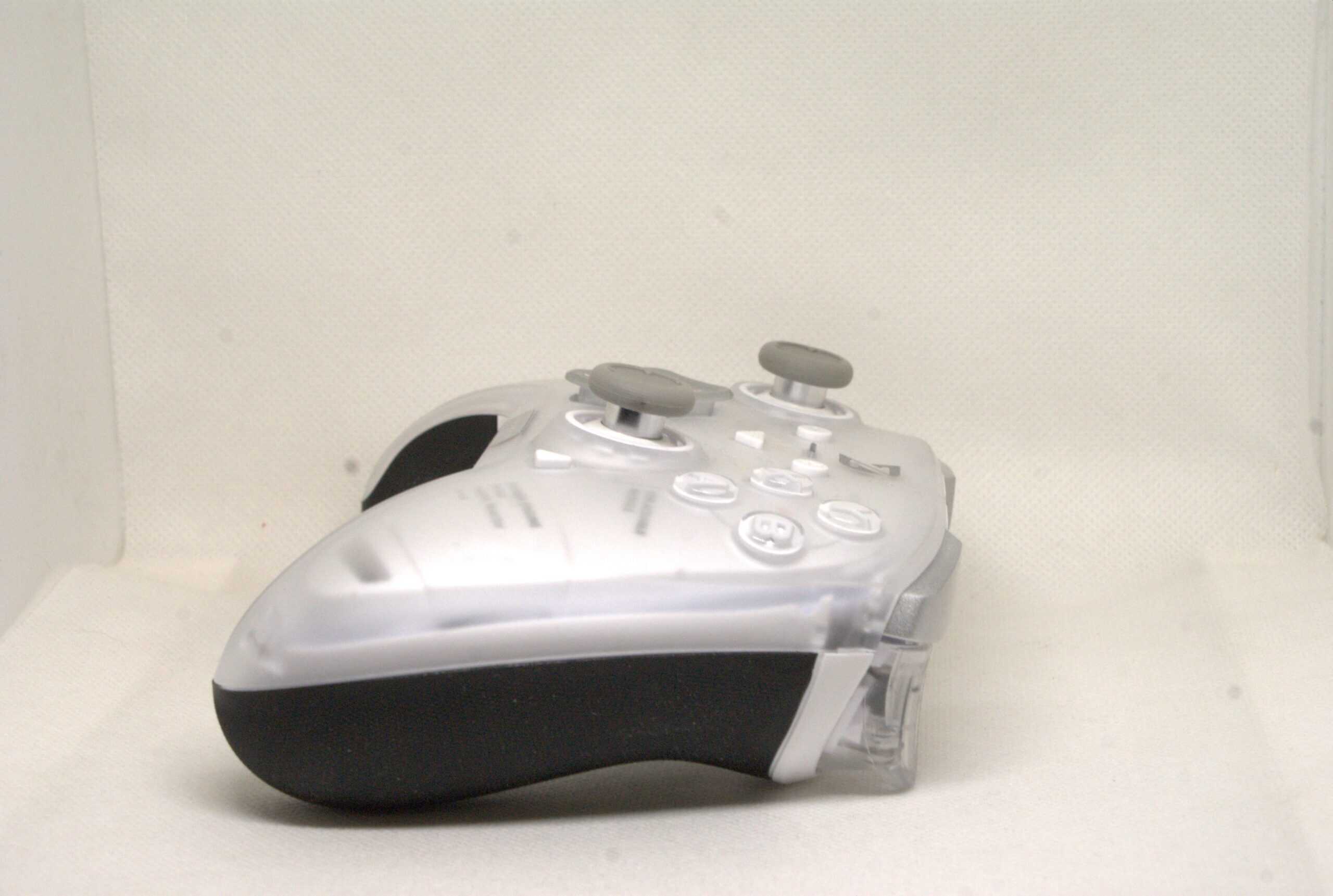
The default analog sticks found in Ultimate Legend are TMR sticks, some form of full-size ones from Ginfull. Feel-wise, I think these are some of the best analog switches I’ve ever used – linear, with minimal friction, and the spring tuning is practically perfect. But that’s not all, as the Ultimate Legend allows for some light customization. While it might not be as impressive as the O+ Excellence, we do have the option of changing analog switches. Besides fairly standard options like the Alps RKJXV1224 and Favor Union FJR10k, we have the fairly modern K-Silver JS13 Pro. Honestly, they don’t stand out in any way, and I don’t see much difference in feel between them and other designs in the Jx13 family (aside from the potentiometers), but they are praised for their performance.
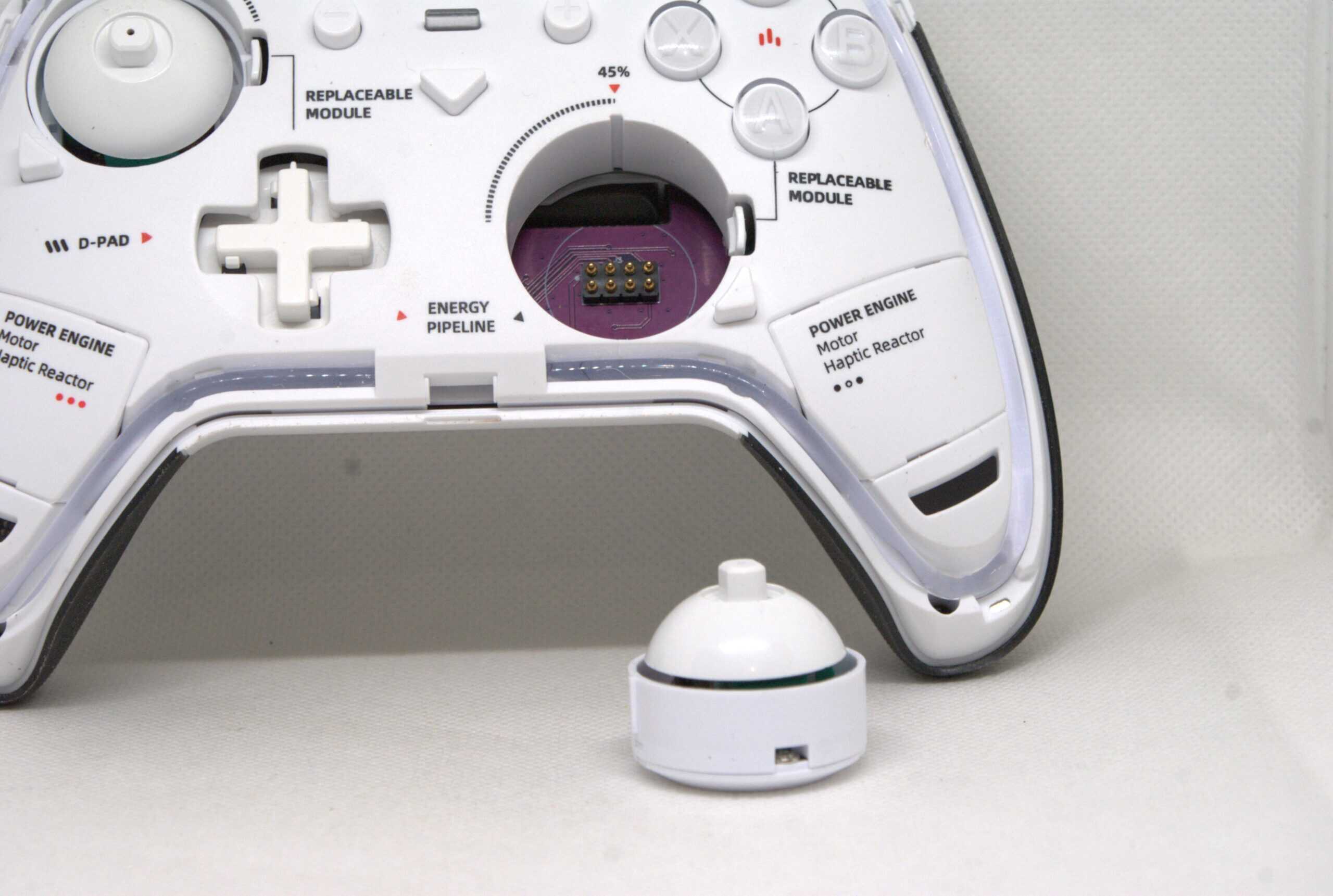
Moving on to ABXY switches, we have a very interesting concept – full-size mouse switches. While they may not be on the level of the relatively unknown Super Legend, which used optical switches, they are a very similar approach. There’s no damper here to increase pre-travel, which means making quick inputs is practically a pleasure. The D-Pad is structurally identical to the one on the O+ Excellence. On the front, near the analog sticks, there are also two switches that default to RGB, but they can be remapped. However, their arrangement makes them nearly useless.
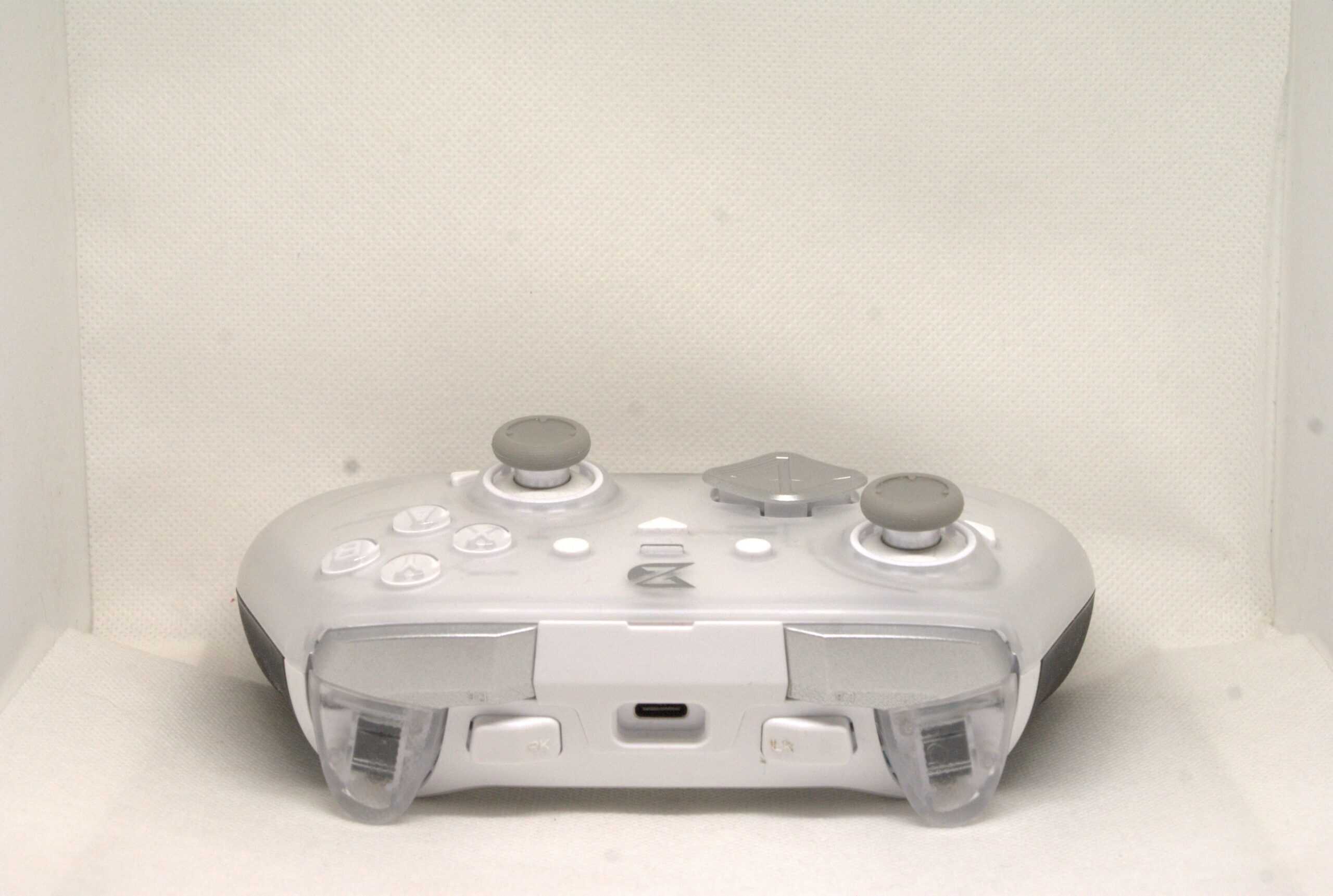
Moving on to the top, we have the triggers, which are a classic design based on Hall Effect sensors with a mechanical trigger lock. I have no major complaints about them, except that they’re quite flattened, making them less pleasant to use than I’d like, though they’re good. Another downside is the trigger lock switch’s position, which is terrible at best. The bumpers, however, are brilliant. Like the O+ Excellence, they’re based on mouse-style switches, which make them quite responsive. The same applies to the remappable mini bumpers, located slightly below the bumpers.
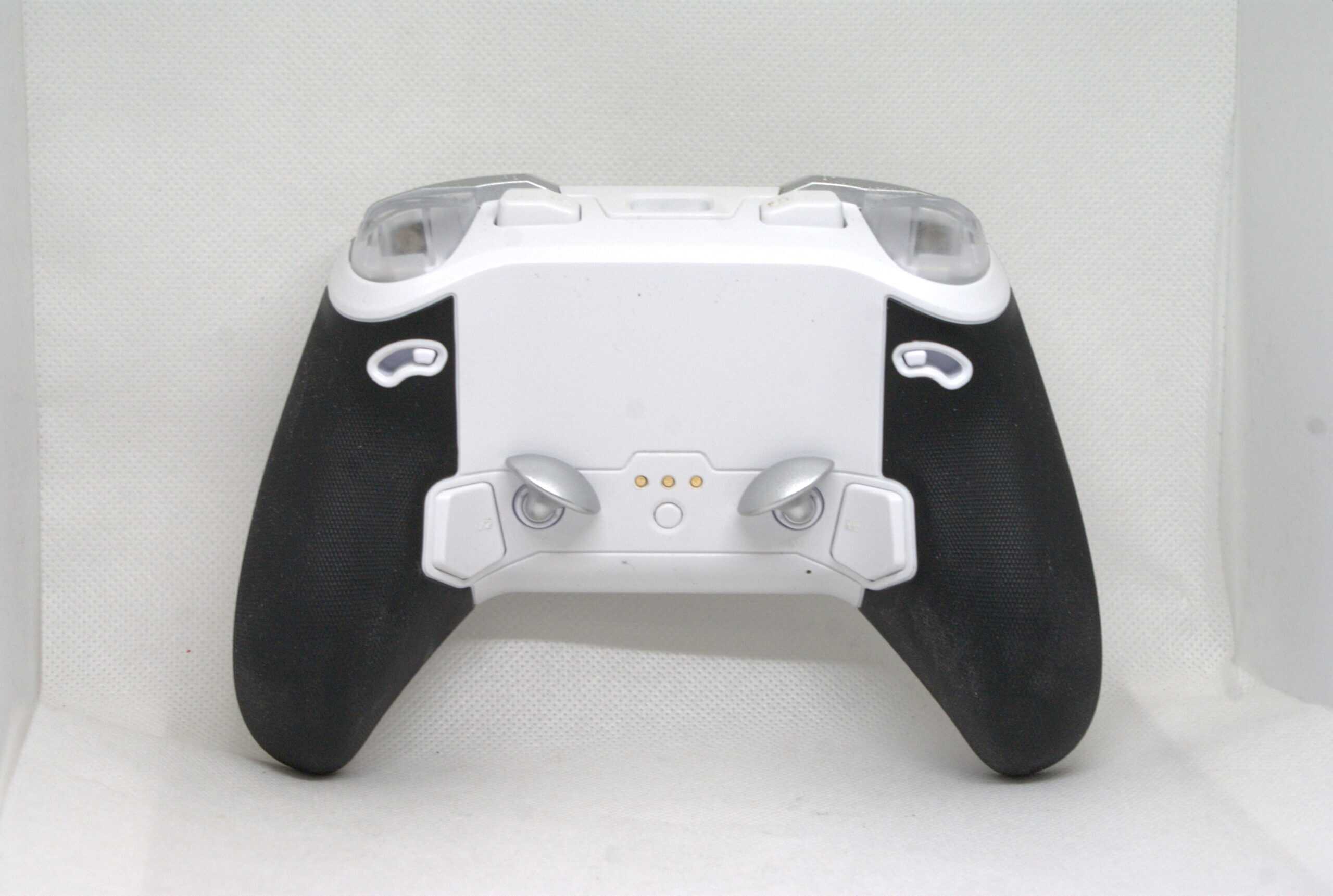
There are four paddles on the back. However, only the inner two are removable, and their shape is very similar to that of the Dualsense Edge. All four have relatively lightweight microswitches and are surprisingly comfortable under the fingers. I’ve seen quite a few people complain that removing the inner paddles leaves behind some rather unpleasant sockets. I haven’t noticed this issue myself, but I know the modders have already addressed it.
Synthetic Tests
Starting with controller’s latency, the Ultimate Legend shows its mettle from the start, offering an outstanding 2.5 ms on the switches at a nearly 4 kHz polling rate and a very good 8 ms on 2.4 GHz at 1000 Hz. A very pleasant surprise – reducing the polling rate to around 1000 Hz doesn’t significantly affect latency, which is a common issue with controllers that offer this feature (but only to a certain point). Bluetooth also performs very well, offering 11 ms of latency. Switch mode is also pleasant in any connection.

The analog stick latency is an even more pleasant surprise, because… it’s lower. At least with a wired controller, it offers around 1-1.5 ms at full polling rate and 3 ms when dropping to 1 kHz, making it one of the fastest designs on the market at the moment. 2.4 GHz and Bluetooth still perform well, offering 13 ms and 22 ms latency, respectively. Switch mode still performs very well, with around 20 ms latency
Stick calibration in Ultimate Legend could easily be broken down into a separate article, but I won’t do that – I’ll just briefly discuss it. The stock analog sticks from Ginfull aren’t perfect. There are quite a few circularity artifacts and quite large differences between the modules. Asymmetry is good, but the same can’t be said for re-centering – one analog stick centers within 2% of my error, while the other reaches up to 3.5%. Fortunately, we don’t have axial dead zones or other similar, unforgivable errors. By upgrading to the JS13 Pro modules, we can expect slightly better performance, or rather—I’d say—more balanced, with less randomness. We still have minor circularity artifacts, but nothing dramatic. Realignment is also very good, and there’s no significant discrepancy between modules.


Moving on to the potentiometers, they fare best in several respects, but also worst. In terms of raw performance alone, they offer almost perfect zero asymmetry, but this comes at the cost of the worst re-tuning (almost 6% for Favor Union/Puyao, 4% for Alps). Analog resolution is also an interesting aspect, as the Ultimate Legend offers (incomplete) 13-bit resolution, unlike most of the market—just 12-bit. Regarding linearity, I haven’t personally performed any measurements, but from other testers, I know that, apart from the contact-based JS13 controllers, they offer near-perfect performance, which makes sense given their design. The stock Ginfull controllers aren’t bad, but unfortunately, they don’t quite measure up to the JS13 Pro.
The Ultimate Legend’s battery life is also very good. I was able to play for about 12 hours on a single charge at 1000 Hz, which was also surprisingly short.
Software
The Ultimate Legend’s software is the same application used by the O+ Excellence model, with a few added features, so I don’t see much point in dwelling on it again – it works well, but not perfectly. We can expect dedicated PC software in the future, but I don’t know the release date.
ZD Ultimate Legend Summary
To be honest, I don’t see any point in denying the existence of this controller on the market. Whoever came up with the idea of creating the Ultimate Legend model as it is deserves a standing ovation from the entire pad community. The controller has been literally freed of almost every possible issue that could be considered a “but” The only issues here are subjective ones, such as the shape of the triggers and the position of the rear switches. The performance of the analog sticks could perhaps be improved somewhat, but replacing them is so inexpensive and simple that I see no reason to consider it a drawback – everyone should be able to find something they like. In short, if you have an unlimited budget, the Ultimate Legend is one of the best choices right now.

If you have an unlimited budget for a controller, the Ultimate Legend is one of the best choices right now.
- Great build quality
- Exemplary performance in synthetic tests (including latency)
- Packed with features
- No major flaws
- Only subjective things
This review was made possible thanks to ZD and GadgetHyper. Orginal review in Polish.
I focus on reviewing PC controllers and sim racing accessories.