There’s a certain type of gear discourse that takes over competitive gaming communities every few years. A new technology arrives, the top players start using it, and within months it’s impossible to have a conversation about improving without someone insisting you absolutely need it. Rapid Trigger is in that phase right now. Walk into any CS2 subreddit or Valorant Discord and someone will tell you their rank went up the moment they switched keyboards.
So let’s be honest about what it actually does.
The Problem Rapid Trigger Solves

Standard mechanical keyboards work on a simple contract: press the key past a fixed point, it fires. Release it back past that same point, it resets. This sounds fine until you think about what competitive FPS games actually demand of your movement — which is not smooth, deliberate keypresses, but rapid, chaotic direction changes where you’re constantly tapping and releasing keys in quick succession.
That reset point matters more than most people realize. In the gap between releasing a key and it fully resetting, there’s a brief window where nothing happens. Your character’s momentum is still active, your keypress isn’t registering yet, and in a game like CS2 where your shooting accuracy is directly tied to whether you’re moving or standing still, that window costs you.
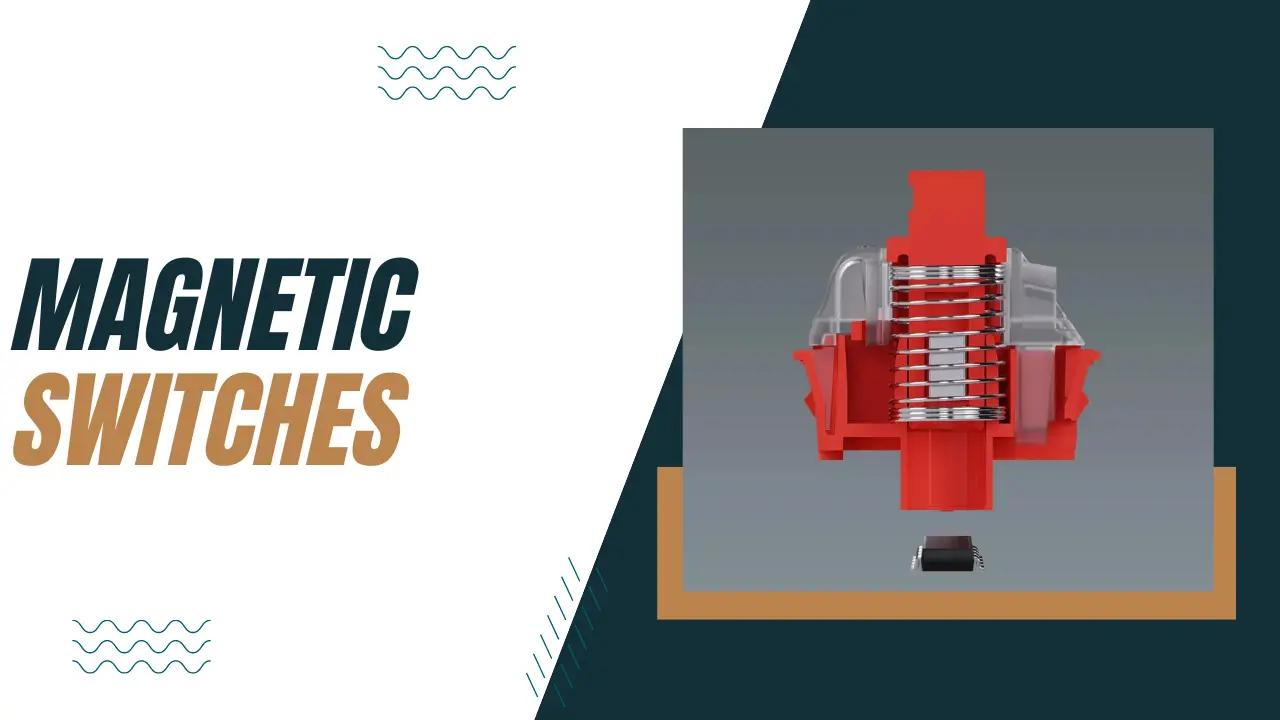
Hall Effect magnetic switch keyboards approach this problem from a different angle entirely. Rather than waiting for a key to physically travel back to a fixed point, they use magnetic sensors to track the exact position of the key at all times. Rapid Trigger is the result of applying that precision: the key deactivates the instant it starts rising, and reactivates the instant it starts falling again — from wherever it currently is, not from the top of its travel. The reset point effectively becomes wherever the key is right now.
In movement terms, this collapses the gap. What you feel is that direction changes happen immediately when you want them to, not slightly after.
What This Actually Means in CS2

Counter-strafing is the skill Rapid Trigger touches most directly, and it’s the most important movement mechanic in the game. The idea is simple: you press the opposite direction key to cancel your momentum instantly, creating a brief window of accurate shooting before you start moving again. Do it well and you can peek, fire, and retreat faster than your opponent can react. Do it with a standard keyboard and there’s a small but consistent delay in how quickly your character responds to that opposite key input.
With Rapid Trigger that delay shrinks. Not to zero — physics still governs your character’s momentum — but the keyboard’s contribution to the delay essentially disappears. Your stop timing gets tighter, your shooting window opens slightly sooner, and repeated peeks feel less like fighting the keyboard and more like pure movement.
Jiggle peeking works the same way. The speed of your direction reversals is partly a mechanical skill and partly a hardware ceiling. Rapid Trigger raises that ceiling.
The honest caveat is that none of this creates the skill. If your counter-strafing timing is off, Rapid Trigger won’t fix it. What it does is ensure that when your timing is right, the keyboard doesn’t add its own delay on top. For players actively working on their movement, that’s a meaningful difference. For players who haven’t developed those mechanics yet, it’s largely invisible.
What About Valorant?
Valorant has the same movement-affects-accuracy system, and counter-strafing works there too. But Valorant is a different kind of game. It’s slower, more structured, and heavily weighted toward utility, positioning, and team coordination. The percentage of gunfights where the difference between winning and losing comes down to a 5ms movement input is smaller than in CS2. Most fights are decided earlier — by crosshair placement, by information, by which team used their abilities better.
Rapid Trigger still helps in Valorant. Fast peeks feel cleaner, stop-and-shoot timing improves, and aggressive duelists notice the responsiveness. It just has less total surface area to work with. In CS2 it touches the central mechanic of the game. In Valorant it touches one important mechanic among many.
The Technology Behind Rapid Trigger

Most Hall Effect keyboards use magnetic sensors that have been common in industrial applications for decades — reliable, precise, and free from the physical contact degradation that eventually kills a standard switch. Newer keyboards are increasingly using TMR (Tunnel Magnetoresistance) sensors, which offer marginally higher positional accuracy than traditional Hall Effect sensors. For Rapid Trigger purposes the practical difference is small, but the technology is worth understanding if you’re comparison shopping.
What varies much more meaningfully between keyboards is the software. Rapid Trigger settings — the sensitivity threshold, per-key configuration, actuation depth — live in software, and the quality gap between brands is significant. Wooting has the most mature implementation; their software has been refined over years and gives you the most granular control. Keychron and Nuphy are the next most capable. Several budget brands now offer Rapid Trigger too, but with less sophisticated customization. If you’re someone who wants to dial in exact settings rather than use defaults, that gap matters.
Which Keyboard to Get
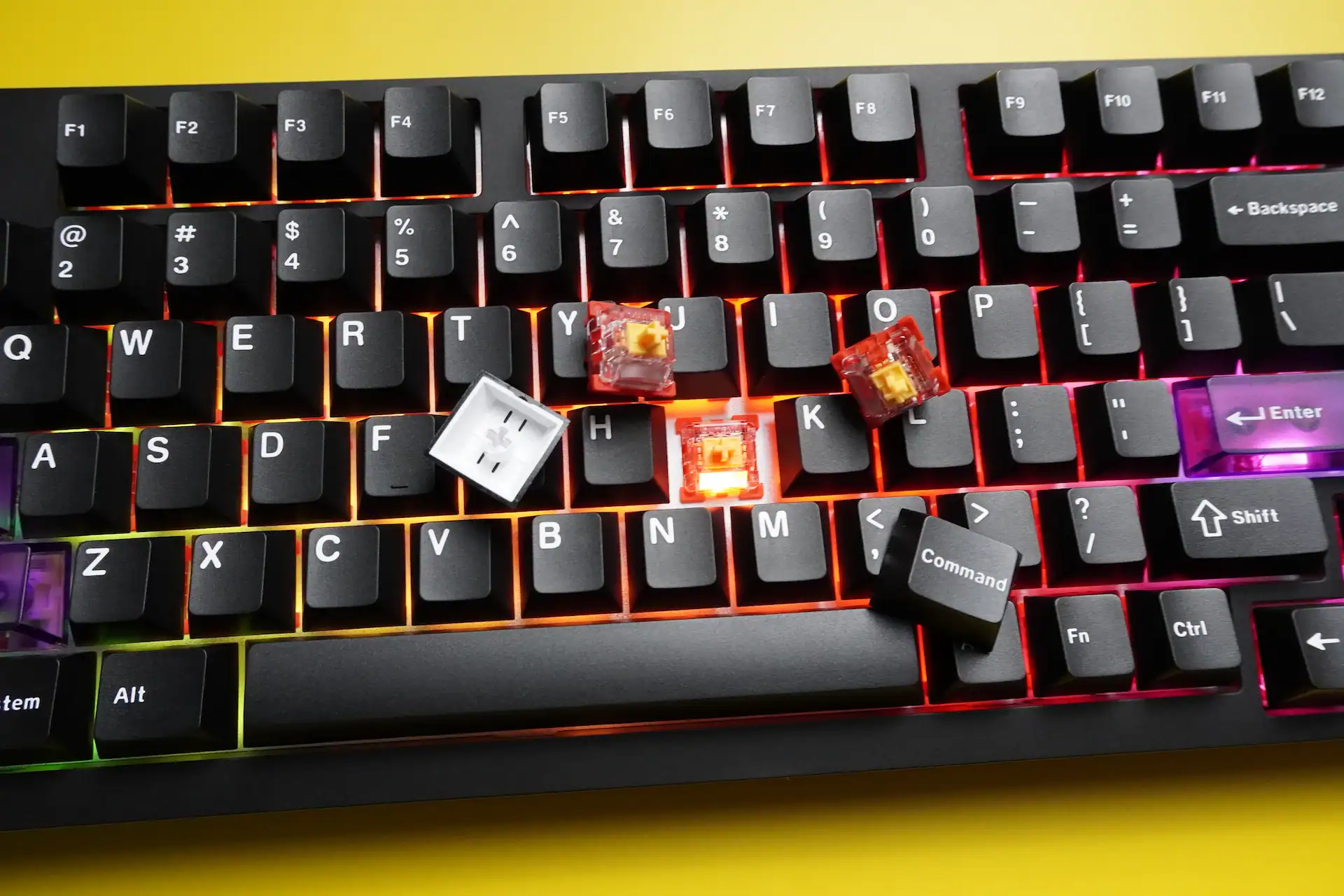
There’s no single right answer here because the market has expanded dramatically. A year ago Hall Effect keyboards were mostly a premium-tier purchase. Now there are credible options under $50. The full Hall Effect keyboard list covers the current landscape in detail, but the broad shape of it is this:
If budget isn’t a concern and you want the best software and lowest latency, Wooting is still the benchmark. If you want excellent build quality with wireless flexibility, the Keychron K2 HE or K4 HE are well-rounded choices. If raw latency is the priority above everything else, the ATK RS6 measures around 0.16ms wired — among the fastest available. For a low-profile setup, the Nuphy Air75 HE sits under 0.8ms and has genuinely good software. And if you’d rather not spend much, the Gamakay TK75 HE V2 and Aula Win60 HE bring the core technology down to the $40 range.
There are also solid Wooting alternatives worth considering if the price or layout doesn’t work for you, and a separate low-profile Hall Effect category if that’s your preference.
Is It Worth It for You?
That depends entirely on where you are as a player. If you’re still developing core habits — crosshair placement, map knowledge, utility usage — Rapid Trigger will sit invisibly in the background. Those fundamentals will determine your rank far more than input latency.
If you’re at a level where you’re actively working on movement mechanics, where you’re aware of your counter-strafing and actively trying to improve it, then yes — Rapid Trigger removes a genuine friction point. It won’t add skill you don’t have, but it will stop subtracting from the skill you do have.
And if you’re at a genuinely competitive level where tiny margins matter, you probably already know the answer.
The other thing worth saying: the gear conversation always risks becoming a distraction. A player with good fundamentals and a $40 Hall Effect keyboard will outperform a player with poor fundamentals and a $200 flagship. Rapid Trigger is a real advantage, not a placebo — but it’s a small multiplier on existing skill, not a substitute for developing it.
It’s also worth remembering that the right upgrade depends on what you’re actually playing. Movement mechanics are central in CS2, a better controller matters more in something like Elden Ring, and in Fortnite the in-game economy moves the needle as much as your setup does — cheap vBucks go further when you buy them through Eneba rather than directly. Match the upgrade to the game before spending anything.
Gamer and tech reviewer in my spare time.